The Hugo spritz is the new king of breezy summer drinking.
When the first heat wave of the year hit New York last month, bartenders across the city steeled themselves for a few days of marathon spritz-making. At Dante, the Greenwich Village bar known for its cocktail program, Linden Pride, an owner, expected the entire easy-drinking side of his menu to get a workout. But after the rush, Mr. Pride reviewed the week’s service reports to find that a single drink had outsold the rest — not just at the original Dante, but at its two sister bars in the neighborhood, as well as at Dante Beverly Hills and the new Dante Mayfair in London.
Topping his charts, coast to coast and across the pond, was the Hugo spritz.
A light, floral medley of elderflower liqueur, Prosecco and sparkling water, the Hugo spritz is having a banner year after spending the last few summers creeping onto more and more cocktail bar and restaurant menus.
“It’s in a new stratosphere,” Mr. Pride said. “Standing in the bar last weekend, I felt like every single person had a Hugo spritz on the table.”
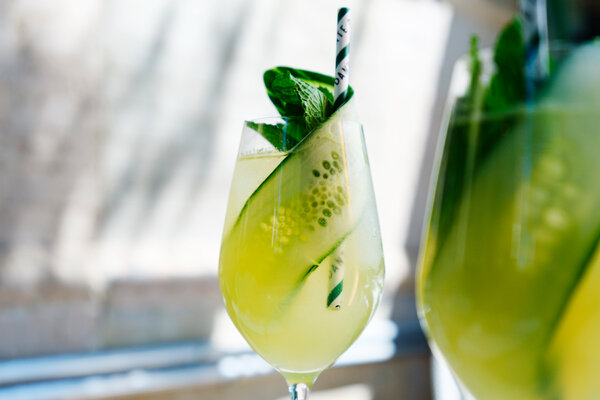
Usually served in an oversize wine glass, garnished with a lime wheel and tuft of mint, the drink has the same effect as a sizzling platter of fajitas. “When it’s carried through the dining room, everybody sees it, and they’re like, ‘Oh, I want that,’” Mr. Pride said.
The cocktail, which the bartender Roland Gruber developed in the Italian Alps in the early 2000s, is part of a rich lineage of libations from the region that make use of native botanicals.
“In the mountains of Italy, there has always been the tradition of mixing homemade elixirs with wine,” said Edoardo Mantelli, the owner of the Milan-inspired Saraghina Caffè in Fort Greene, Brooklyn, where the Hugo is a best seller. “In the Alps, many families would make their own elixirs with local flowers. Those are the predecessors of the Hugo spritz.”
Mr. Gruber’s original recipe used Italian melissa, or lemon balm, as its floral component, but when St-Germain introduced its elderflower liqueur in 2007, it soon became the standard. The botanical liqueur relieved bartenders of the task of making a cordial or syrup from scratch, and imparted a similar essence.

The Hugo spritz is as easy to make as it is to drink, requiring little more than ice, Prosecco, elderflower liqueur and soda water, and mint and lime for garnish.Credit…Linda Xiao for The New York Times. Food Stylist: Barrett Washburne.
Cocktail professionals credit the Hugo spritz’s growing profile to shifting preferences at the bar: namely toward ease, novelty and aesthetics. The Hugo offers a simple warm-weather drinking experience, with none of the bitterness of an Aperol spritz. “It’s refreshing on a hot day, and the lower A.B.V. allows you to enjoy a drink but not feel as heavy,” said Jon Neidich, founder of Golden Age Hospitality, which operates New York bars like Le Dive and the Nines. “There’s a lightness, versus the viscosity, strength of taste and syrupiness of an Aperol.”
While spritzes have historically been considered summer drinks, Mr. Pride said that distinction was falling away as customers prioritized lighter options year-round. “It’s totally transcended seasonality,” he said. “I think that’s just the way people like to drink now.”
According to Emma Fox, the global vice president of St-Germain, the Hugo was particularly well positioned to take off in the United States given consumers’ readiness to make anything light and bubbly. “There is so much more versatility in the spritz space in the U.S. compared to other markets around the world,” she said.
For elderflower liqueur to emerge as the spritz base of the moment is hardly a coincidence. Like Aperol in 2018 and Guinness more recently, the Hugo is the benefactor of a savvy marketing push by St-Germain.
Promoting the liqueur (and thus, the Hugo) to bartenders and drinkers alike over the past few years felt less like introducing something new and more like meeting a need, Ms. Fox said. The company invested in social media marketing, celebrity-driven campaigns, festival appearances and events to strengthen the cocktail’s name recognition. “Just getting a drink in hand is huge.”
At DeLaurenti, a specialty foods store in Seattle’s Pike Place Market with a spritz bar upstairs, the Hugo attracts customers looking for something new. “People see elderflower on the menu, and they want to ask a question about it,” said Matt Snyder, the owner. “The color is different from what they expect with a spritz, and it doesn’t hurt that it doesn’t knock people off their chairs. They can drink one and have a life after, perhaps even drive home.”
At Wilder, a restaurant in the Marina district of San Francisco, the Hugo is available as part of “Tower Hour,” where groups can order a metal structure with five arms, each cradling a bubbly spritz. The restaurant added the Hugo to its list of tower-able options after stand-alone orders of the drink exploded. “Once guests could order five Hugo spritzes, it really took off,” said Linore Rong, Wilder’s social media manager.
One sign that a cocktail has reached escape velocity is that bars begin to riff on the original, playing with expectations and putting their stamp on the drink.
Mr. Pride, of Dante, said the bar tinkered with the recipe in an effort to ruin you for all other Hugos. At all locations, the cocktail features aerated cucumber juice and a splash of gin, to play up St-Germain’s botanical quality and tint it a “bright, effervescent green.” The goal, he said, is for “people to sit at the bar, order a Hugo spritz, and think, ‘Wow, this is the best version I’ve had.’”

One sign a cocktail is peaking? Bars begin to riff on the original. At Bar Bianchi in the East Village of Manhattan, the Hugo, left, inspired the Giuseppe spritz, which includes crème de menthe.Credit…Karsten Moran for The New York Times
At Bar Bianchi, a Golden Age restaurant in the East Village modeled after a Milanese cafe, the Hugo inspired the Giuseppe spritz, which replaces the traditional mint with a splash of crème de menthe. “The mint liqueur has the same refreshing taste but just gives it a little bit more depth,” Mr. Neidich said.
Deux Chats in Williamsburg is also tapping into the Hugo’s ascent by channeling it in a cocktail that feels more at home on its martini-heavy menu. “Sometimes, you have to roll with the punches and give in to what is trendy,” said Liam Weitz, the head bartender. “People can order a Hugo spritz, and I’ll happily make them one, but for our menu, why not do a version that works with our brand?” His Hugo 50-50 uses two types of gin, citrusy Corsican quinquina vermouth and St-Germain, stirred with mint and served ice cold.
As temperatures rise and the Hugo’s high season approaches, bar owners expect orders to increase, but you needn’t rush to drink one before the end of the summer: Many are making the cocktail a permanent fixture on their menus, a reminder of sunnier days once the season wanes.
“It’s a cognitive thing, the association of mint with better weather,” Mr. Weitz said. “People underestimate the power of a garnish.”
Follow New York Times Cooking on Instagram, Facebook, YouTube, TikTok and Pinterest. Get regular updates from New York Times Cooking, with recipe suggestions, cooking tips and shopping advice.