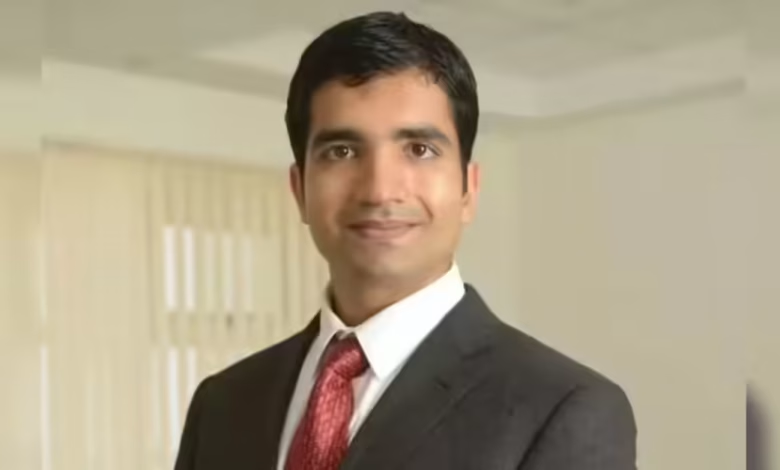
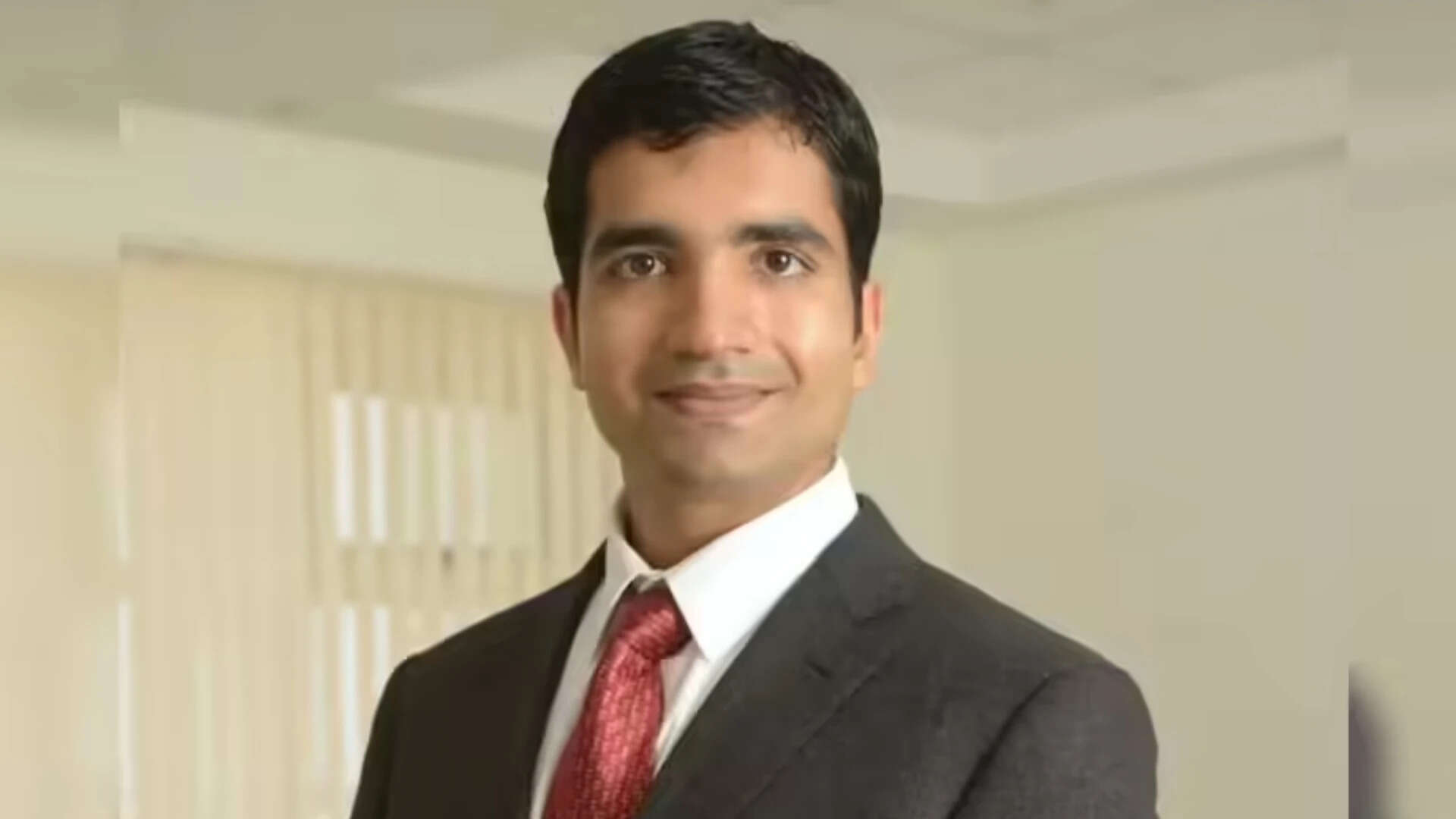
Narayana Health’s Viren Prasad Shetty Advocates for Managed Care to Tackle Hospital-Insurer Friction, ETHealthworld

The rising healthcare costs are seen as the key factor behind the health claim burden and rising renewal premiums…
When you say healthcare is expensive, what goes unsaid is that people are using more healthcare because they are getting treated more proactively. So, the healthcare utilisation rate rises not by 5-10%, but exponentially. People today are seeking more healthcare to live longer, and be more active and productive in advanced age. This is the trend; you cannot argue against it. So the product, health insurance, is essentially paying for the increased healthcare use across society.
How do you, with stakes in healthcare (Narayana Hrudayalaya) and health insurance (Narayan Health Insurance), view the hospital-insurer friction that peaked in 2025?
Unfortunately, the existing industry approach is to think of an insurance claim as something that will never happen, the probability (in their minds) is low. Our approach is different because we bring the perspectives of clinicians, doctors, and healthcare providers. We know people will suffer from heart issues, cancers, neurological conditions, give birth, and so on. We know these things will happen.The old model of health insurance sees hospitalisation as an inconvenience—just find a way to deny or reject it because it is not part of the plan. For instance, insurers sell fire insurance on the assumption that a house will never catch fire, and design their policies as a low probability, low volume event. However, under our model, we are selling health insurance on 100% probability that healthcare needs will arise over the lifetime of a customer. Policyholders are paying us for it. So our responsibility is to provide healthcare services, including check-ups, tests, 24-hour access to doctors, and so on, so that when health needs crop up, it is all taken care of.
What measures can both hospitals and insurers take to reduce disputes?
It involves working together to reach a common understanding of what customers need—cashless service, transparency, and clarity on what is covered, what’s not. All this is well understood, but execution is hard. Besides, this is not just an India problem. We operate hospitals in three countries and encounter similar challenges. When patients are at the hospital speaking with their doctors, they are making a very personal calculation about what is best for their life and health. The doctor is focused on the patient’s medical needs. The disconnect sometimes arises when the insurer has a different view of what is appropriate for the patient. These problems can be fixed, but doing so requires much better coordination and communication among all stakeholders.
The Insurance Regulatory and Development Authority of India (Irdai) has set up committees to examine issues affecting the sector, including disputes between hospitals and insurers. What are your expectations from these efforts?
I think when parents fight out in the open, the children (patients, policyholders) suffer the most. So, arguing via news articles is not useful for anyone, as customers lose trust in the system. I am not saying that nobody (in the healthcare space) is at fault. There are definitely hospitals that have had issues, doctors who overcharge, just as there can be patients who commit fraud, and insurance companies that arbitrarily reject claims. As India’s only hospital-owned health insurer, we look forward to stronger working relationships between hospitals and insurers. For the past two years, the number of people buying health insurance in this country has not budged much. That should not be the case. Insurance penetration needs to deepen, but it hasn’t. The first objective for all stakeholders should be to grow the sector and increase the number of people with insurance policies.
It’s been close to two years since Narayana Health Insurance rolled out its products. What has been your experience? Have you been able to reduce this friction?
We have 2,400 hospitals across our network. These are hospitals that we have worked with for a long time. We know these hospitals and trust them. Anyone who comes through them faces no questions because, for us, the illness is very rarely a surprise.
We heavily encourage our policyholders to undergo health check-ups. They are evaluated by healthcare professionals, and if anything comes up, they get a secondary consultation with a specialist. We do not charge anything extra for the primary consultation. It is part of the policy. We also maintain all their health records. So, their health issues are never a surprise to us. There is no reason for us to reject a claim.
But it is not easy to replicate this model because, by design, we operate in a much smaller geographic area. For example, we operate across Karnataka, and in some cities such as Kolkata, Guwahati, Jaipur, Raipur and Jamshedpur. It would not work as easily if we tried to build a national plan that covered the entire country, all people, cities, nursing homes, and doctors.
Your model’s low friction promise rests heavily on the patient staying within your network. For a policyholder who falls ill while travelling or needs a specialist who is not available at the hospitals you empanel, won’t the friction emerge?
Narayana Health Insurance plans have been designed to eliminate policyholder inconvenience during claims and discharge process by working with a trusted network of provider hospitals that cover all the cities we operate in. The incidence of policyholders requiring hospitalisation during travel is extremely low, and our provider network has been carefully selected to include all specialists any patient would require to access care. In the rare instance that policyholders seek care out of network, the admission and claims experience wouldn’t be any different from any other insurance provider.
Insurance companies often cite rising claims, healthcare inflation, hospital overcharging, and pricing ambiguity as reasons for the increase in renewal premiums. The industry is nearly unanimous in its call for a healthcare regulator…
The claim ratios go up due to increased healthcare utilisation, which they are not factoring in. It is not just the healthcare cost. Fuel costs go up every year, as do infrastructure costs. All the input costs go up. Establishing a healthcare regulator will not resolve all problems. In some hospitals, there may be instances of overcharging, but these do not make up the majority of cases.
How would you respond to the charge that hospitals are reluctant to join the National Health Claims Exchange (NHCX) platform, which has the government’s backing? Insurers feel that with greater, transparent information sharing, many of these disputes can be nipped in the bud.
It’s not that hospitals are not coming on board. Many hospitals have signed up with NHCX. The issue is that hospitals in the organised sector don’t even account for 10% of healthcare facilities in the country. The bulk of unorganised hospitals and nursing homes don’t have hospital information systems or billing software. We have 180 people building only software, but not everyone can afford that. Most hospitals don’t have the technological backbone to be compliant with this. So, the expectation that our industry will operate like mature industries, such as the financial sector, is misplaced.
There are teething challenges and technical gaps. When hospitals move claims to an online platform, the disputes do not necessarily go away; they move to another channel. But I think what can solve these issues, at least for us, is having the payer and the provider be the same institution, so you cannot argue with yourself.
In this model, isn’t there a risk of over-treatment or over-charging if the insurer is less likely to argue? How do you ensure that the patient is not steered towards a cheaper option to protect the insurer’s claim ratio? What are the safeguards that you have put in place?
We are a healthcare company and the healthcare needs of our patients come first. We have hand-selected the network doctors, and the treatments being offered are in our patients’ best interest.
Narayana Health is following the global standard of moving away from a fee-for-service model that incentivises the most expensive surgery over earlier interventions that lead to better longterm health outcomes. Similarly, undertreatment will not make sense when we are responsible for the patient’s health. If we do not diagnose and treat a condition earlier on, it will get worse and we will end up paying more in the future.
You mentioned that the hospitalinsurer dispute is not an Indiaspecific problem.
As I said, the healthcare utilisation will only go up. You cannot pay for everyone’s food if they have unlimited appetites. You need to ration it out, as the Western countries are doing. For instance, there are certain immunotherapy drugs, robotic procedures and very high-end treatment procedures, where the government will outright say the system cannot afford it.
So, is there a need to rethink the product construct and the extent of coverage?
Yes. In a highly regulated environment, all products end up looking the same. The Irdai, as a regulator, took a very proactive approach and said it would introduce a sandbox model in which we (insurance companies) could run pilots and test different approaches. So we are trying something different. As an insurer and as a hospital, we are building full alignment by controlling both ends of the experience. Our systems may take longer and necessitate more effort. Many others simply sell insurance policies left, right and online, no questions asked. So they miss a lot of things (health parameters).
What are Narayana Health Insurance’s plans in terms of expanding the suite of products and hospital network?
We are developing a product that should be rolled out in six months, allowing customers to buy a policy via WhatsApp in a few clicks. It will be a low-cost product that can be issued in 10-20 minutes, but very limited in what it can cover. For treatment outside our preferred network, standard industry rules would apply. We are also exploring low-cost, sachet or bite-sized insurance products for specific procedures. These are popular in China, for instance. We are also continuously increasing our network of hospitals and clinics.
Buying a policy with a few clicks is frictionless, but coverage limitations are often apparent only at the claims stage. How do customers understand these limits at the point of sale?
We haven’t received this complaint from our policyholders yet. We spend a lot of time educating the patients before they take up a policy, and we have a large team available to explain the policy conditions. Fortunately, our artificial intelligence (AI) team has discovered that it’s much easier to build a bot that will be able to explain the policy terms and conditions to our patients whenever they have a query, and that is what they will roll out this year.