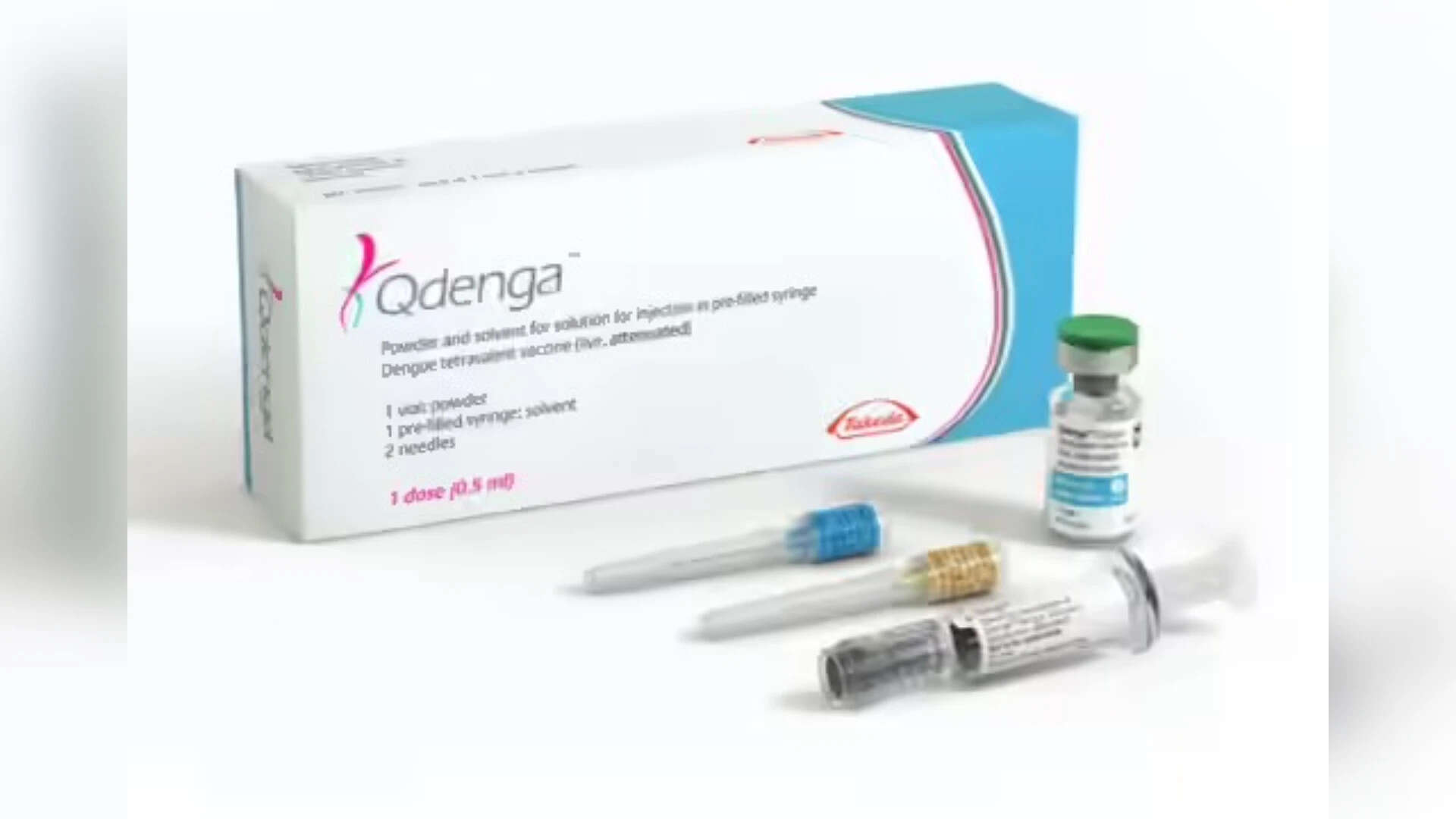
India Approves Qdenga: A Groundbreaking Dengue Vaccine Revolutionizing Public Health, ETHealthworld


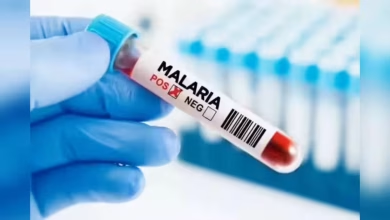
Mumbai: As dengue continues to claim lives and strain healthcare systems across India every monsoon, the country has taken a significant step towards strengthening its fight against the mosquito-borne disease. The Central Drugs Standard Control Organisation (CDSCO) has approved Qdenga, India’s first dengue vaccine, marking a major milestone in the country’s efforts to prevent one of its fastest-growing vector-borne diseases.
The approval comes at a time when the reported burden of dengue in India has risen sharply. Reported dengue cases have increased 11-fold over the past two decades, according to the study Dengue in India: Temporal and Spatial Expansion in Last Two Decades by the Society of Medical Arthropodology (SOMA).
In 2025, reported dengue cases exceeded 113,000, according to data from the National Centre for Vector Borne Diseases Control (NCVBDC). However, researchers believe the true burden is far higher, with modelling studies estimating that India records tens of millions of dengue infections each year.
Developed by Japanese biopharmaceutical firm Takeda, the vaccine can be administered to individuals aged 4 to 60 years, including those who have previously been exposed to dengue.
The vaccine is expected to reach the Indian market by early 2027 and is designed to induce a strong immune response by generating detectable antibodies against all four dengue virus serotypes—DENV-1, DENV-2, DENV-3 and DENV-4.
ETHealthworld spoke to doctors to understand how this approval could reshape dengue prevention and why it represents a landmark moment in India’s public-health journey.
A milestone decision
A 2025 study led by researchers from the Indian Institute of Tropical Meteorology, titled Dengue Dynamics, Predictions, and Future Increase Under Changing Monsoon Climate in India, found that changing rainfall patterns and rising temperatures are likely to increase dengue transmission across the country.
According to the study, moderate rainfall during the summer monsoon is associated with higher dengue mortality, while heavy rainfall can temporarily reduce transmission through a flushing effect. Warm temperatures above 27°C and humidity levels between 60 per cent and 78 per cent further elevate the risk of dengue.
Dr. Prachi Sankhe, Consultant, Internal Medicine Physician, Apollo Hospitals Navi Mumbai, said, “Urbanisation, changing rainfall patterns and increasing population density have all contributed to the growing burden of dengue across many parts of India.”
She added, “For hospitals, the impact is most visible during seasonal surges, when large numbers of patients present with fever requiring evaluation and monitoring. Those who develop warning signs or severe dengue often require admission and intensive supportive care.”
Against this backdrop, Dr Vasant Nagvekar, Director, Infectious Diseases, Sir HN Reliance Foundation Hospital, Mumbai, described the approval as a long-awaited development.
“It’s very painful to see people suffering from a mosquito-borne disease that is entirely preventable. India continues to bear one of the world’s highest dengue burdens, with the disease now both epidemic and endemic. The availability of this vaccine is a major step forward because dengue continues to cause severe illness, hospitalisation and avoidable deaths,” Dr Nagvekar added.
Reducing hospitalisations and severe disease
Doctors believe the most immediate public-health impact of vaccination will be a reduction in severe disease, hospitalisations and, ultimately, dengue-related deaths.
Dr Nagvekar said, “I expect the vaccine to cut hospitalisations by nearly 80 per cent to 90 per cent. Even if people develop dengue after vaccination, the illness is expected to be much milder—similar to how influenza vaccines reduce disease severity. Fewer hospitalisations will naturally translate into lower mortality. If adopted widely through a mass immunisation programme, the vaccine could also contribute to herd immunity.”
Taking an intensivist lens, Dr Sanjith Saseedharan, Director, Critical Care, S. L. Raheja Hospital, Mahim, “I have seen dengue progress rapidly from what appears to be a mild fever to shock, bleeding and multi-organ failure. Even a meaningful reduction in severe dengue could save lives, ease pressure on hospital wards and intensive care units, and reduce the financial and emotional burden on families.”
However, doctors emphasised that vaccination alone will not eliminate dengue.
Dr Saseedharan said, “The approval represents a shift in India’s dengue strategy—from reacting to outbreaks to preventing infections and complications. However, vaccination must complement, not replace, mosquito control measures, early recognition of warning signs and timely medical care.”
The road ahead
Takeda said the vaccine is expected to become available through private healthcare facilities by early 2027. Asked about discussions with the government on wider deployment, Peter Streibl, General Manager, Southeast Asia and India Cluster, Takeda, told ETHealthworld, “Takeda’s goal is to provide broad access to all eligible individuals through inclusion in National Immunisation Programmes (NIPs). However, wider availability through public health systems will depend on independent scientific and policy decisions taken by health authorities.”
The company is yet to announce pricing and commercial availability.
Meanwhile doctors believe close collaboration between the government and the private sector will be essential to maximise the vaccine’s impact.
“Ideally, the vaccine should be rolled out through both the public and private sectors so that it becomes widely accessible to people across the country,” Dr Nagvekar said.