“Hate speech is the first step down the path of dehumanisation,” declared Mr. Guterres in his message marking the 2026 International Day for Countering Hate Speech..
It is a “tool of division,” he said, for targeting specific groups, including women, migrants, refugees, LGBTQIA+ people, persons with disabilities and many other minorities, often for political gain.
Fanned by AI
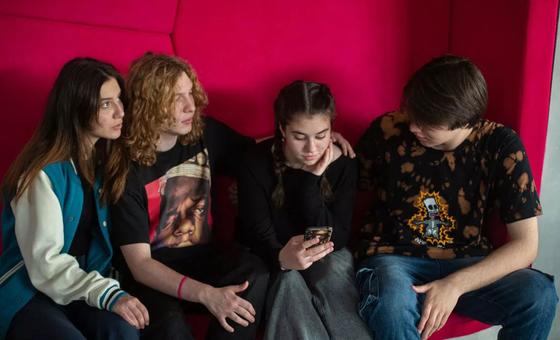
“In our digital age, hate speech spreads faster than ever, amplified by unregulated platforms and intensified by artificial intelligence,” he continued.
“Too many algorithms reward outrage and division, incentivising lies for likes and promoting violence for views. Anonymity online also makes it harder to hold perpetrators to account.”
Kalliopi Mingeirou, Chief of the Ending Violence against Women Section at UN-Women in New York, told UN News that rapid technological developments are facilitating the spread of hate speech and the kinds of conservative, retrograde views about women that are shared online.
“The manosphere is not a single website or community,” she said. “It is a wider ecosystem of algorithm-driven content that can spread misogyny and opposition to gender equality and women’s rights very quickly, and makes it seem pretty normal or acceptable.”
Whilst acknowledging that artificial intelligence did not create misogyny, Ms. Mingeirou is convinced that it is amplifying hatred against women. “Abusers can now create and spread deepfakes, sexualised synthetic images, impersonation content and other forms of image-based abuse faster, cheaper and with less technical skill.”
The UN Secretary-General has long rejected the argument that taking a stand on the issue is an infringement on freedom of speech. In 2019, in response to the alarming rise of hate speech around the world, he launched the UN Strategy and Plan of Action on Hate Speech.
The strategy aims to coordinate efforts across the United Nations system to identify, prevent and confront hate speech whilst respecting international human rights standards. “Freedom of expression,” he says, “must never be an excuse for harmful messages.”
More recently, the UN Global Principles for Information Integrity propose a vision of a world in which global information flows are no longer dominated by a small group of companies based in a handful of countries.
The principles call for people to have greater control over the media they choose to consume, their own online experiences, and how their personal data is used.