On this “Face the Nation with Margaret Brennan” broadcast, moderated by Margaret Brennan:
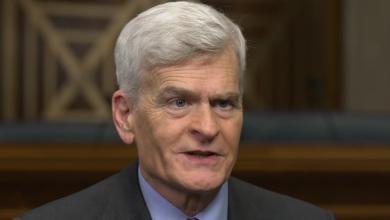
- Sen. Bill Cassidy, Republican of Louisiana
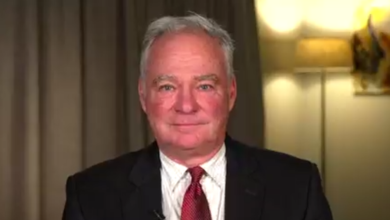
- Sen. Tim Kaine, Democrat of Virginia
- Jan Crawford, CBS News chief legal correspondent
Click here to browse full transcripts from 2026 of “Face the Nation with Margaret Brennan.”
MARGARET BRENNAN: I’m Margaret Brennan in Washington.
And this week on Face the Nation: The fragile detente between the U.S. and Iran is disrupted. And tensions over the war with Iran explode between President Trump and the Republican senator that he worked to defeat.
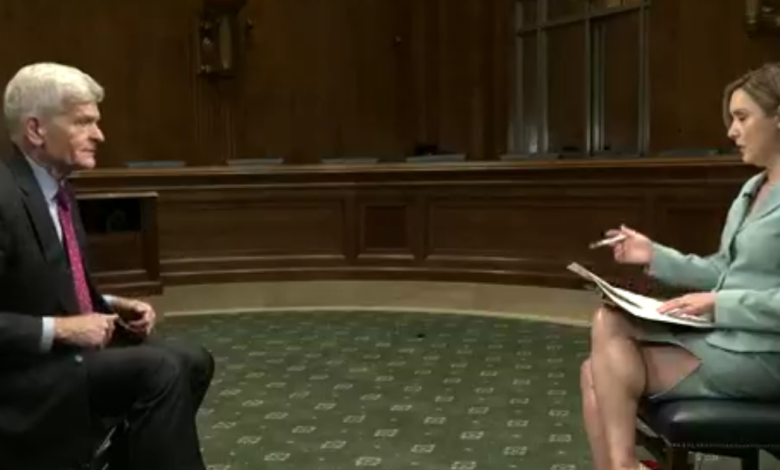
Following a Capitol Hill shouting match between President Trump and Louisiana Republican Bill Cassidy over the senator’s vote against the war with Iran, we spoke exclusively with Cassidy about that exchange, his relationship with the president and his thoughts on the administration’s health policy agenda as Cassidy wraps up his Senate career.
(Begin VT)
MARGARET BRENNAN: You have said that Secretary Kennedy broke promises to you.
SENATOR BILL CASSIDY (R-Louisiana): It’s pretty clear.
MARGARET BRENNAN: Do you think you just made those promises to win your vote, that it was just political expediency?
SENATOR BILL CASSIDY: Easy to surmise.
(End VT)
MARGARET BRENNAN: We will also speak to Virginia Senator Tim Kaine about the shift of the Democratic Party to the left and check in on all the other news of the week.
It’s all just ahead on Face the Nation.
Good morning and welcome to Face the Nation.
Today marks exactly four months since the U.S. launched the war with Iran, and the agreed-to talks over Iran’s nuclear program are in jeopardy following several new rounds of airstrikes. This weekend, Iran attacked U.S. Gulf allies in Bahrain and Kuwait, and the U.S. responded by striking Iranian missile sites and other targets.
Last Wednesday, President Trump faced Republican senators on the Hill, four of whom, including Louisiana’s Bill Cassidy, had just voted with Democrats against his launching the war without congressional approval.
Following that heated meeting, Cassidy did receive a private White House Situation Room briefing with Vice President Vance and special envoy Steve Witkoff. Cassidy then voted in support of the president’s war on a second measure.
And, after that, in our interview, Cassidy told CBS that he spoke to the president and that the conversation was – quote – “positive and looking to build a working relationship.”
Here’s what Cassidy told us about that meeting.
(Begin VT)
SENATOR BILL CASSIDY (R-Louisiana): The president was berating the four people that voted for the War Powers Act. Frankly, I’m not there to be berated. And the president wasn’t invited to dish out verbal abuse.
Raised my…
MARGARET BRENNAN: But that’s what he did.
SENATOR BILL CASSIDY: I raised my hand.
I said: “Mr. President, do you just want – is that a rhetorical question that you’re asking, why do we vote for it, or are you really interested?”
He goes: “I’m really interested.”
I stood up and I said: “This is why.”
And I listed those objectives that I did not see being achieved and how the kind of endpoint of the war kept stretching out longer and longer. He began to speak over me. Unfortunately, I raised my volume to match his, and we spoke to each other like that, or, shall we say, spoke at each other, not to each other.
Now, I shouldn’t have lost my temper, nor should he, but, you know, my wife will tell you, every now and then, my Irish temper gets the best of me, but point being, I needed to know. I need to know to serve my people in my state and my country.
As it turns out, I got a briefing afterwards. In one sense, I actually accomplished the mission of what I needed to do.
MARGARET BRENNAN: But you had also said the American people need that information.
SENATOR BILL CASSIDY: So…
MARGARET BRENNAN: … the American people aren’t getting those public hearings and briefings.
SENATOR BILL CASSIDY: When I asked about that in my briefing, they said, right now, the negotiations are delicate and they could collapse if they’re not nursed along in the appropriate way.
I can accept that. Sometimes, you have to have some space for people to come to an accommodation. That’s the reason they said for their kind of lack of being forthcoming. I can accept that.
MARGARET BRENNAN: Not only did you say this is the worst foreign policy blunder on record, Reagan would be rolling in his grave. You said America lost the credible use – credible threat of force, which is another way of saying that President Trump’s threats to return to bombing are empty threats.
SENATOR BILL CASSIDY: I don’t know if they’re empty threats, because he can certainly return to bombing.
But the fact is that a medium-sized power at this point is perceived to have fought a superpower to a draw, requiring some measure of accommodation of we, the superpower. And we spent $29 billion and we have 13 Americans dead.
We hope to get back to status quo ante. I will say, in the briefing last night, they would make the argument that we’ve actually made progress. If that’s the case, we should all be thankful.
MARGARET BRENNAN: Would you call for a vote for some kind of congressional oversight if an actual agreement is reached?
SENATOR BILL CASSIDY: I think this would amount to a treaty. Congress has a…
MARGARET BRENNAN: It does not?
SENATOR BILL CASSIDY: I’m saying it would.
MARGARET BRENNAN: It would?
SENATOR BILL CASSIDY: And so, I mean, if it – I don’t know the technical definition of a treaty. Seems like a treaty to me. And so, if it is, then Congress should be able to weigh in.
MARGARET BRENNAN: Do you have that kind of commitment that, when things aren’t so delicate, Congress actually will be read in and perhaps put to a vote under INARA?
SENATOR BILL CASSIDY: I think I have shown, at least on my level, that I’m willing to make tough votes in order to get that briefing that I feel I need to have the truth to make a decision that’s good for my country.
So – so, we didn’t talk about that last night, but I think that’s a fair statement.
MARGARET BRENNAN: Will anyone else hold the president accountable once Cornyn is gone and Tillis is gone and you’re gone?
SENATOR BILL CASSIDY: The simple answer will be yes.
The men and women who serve in Congress, by and large, love our country. I mean, they all love our country deeply. And, by and large, they will do what is required.
Now, when you’re running for office, you have to be aware of what your voters are interested in. You have to talk about what your voters are interested in if you want to get reelected. But, in the Senate, at least, there’s that space of four years prior to that, and I think you see every – – every – every period those senators that step up and say, we need something different, we need more.
The Senate is a separate body, separate from the presidency. I think we’re seeing that.
MARGARET BRENNAN: Do you think the president understands that?
SENATOR BILL CASSIDY: I don’t know if the president does. Sometimes, he acts as if Congress is merely an appendage. And, frankly, sometimes Congress acts like it’s an appendage.
But, that said, I think he got the message yesterday. Congress wants to be read in, and Congress has our rules and procedures that our founding fathers set up. And they set it up precisely so that there would not be too powerful of an institution of a presidency, designed to reflect all of the American people, not just the will of one person.
MARGARET BRENNAN: That’s being tested right now.
SENATOR BILL CASSIDY: I suppose it’s being tested, but, hopefully, we pass the test.
MARGARET BRENNAN: Well, the president seems to have some changing priorities himself when it comes to what he’s asking you all to deliver on. He canceled that event on the bipartisan housing bill, which had strong support from both sides of the aisle.
It was aimed at least at affordability. He seemed to sabotage his own nominee to run the intelligence community, Jay Clayton. He told him, don’t show up at the hearing that Senate Republicans had scheduled. And he’s been talking about the ballroom, legislation like the SAVE Act, which Leader Thune has said there are not the votes for it.
What do you think his priorities are right now?
(LAUGHTER)
SENATOR BILL CASSIDY: Margaret, you’re asking me to get inside the president’s brain. I cannot get inside the president’s brain.
MARGARET BRENNAN: You had lunch with him yesterday.
SENATOR BILL CASSIDY: I did, but it wasn’t really, you know, sipping tea with a pinkie finger out and saying, hey, how do you feel about life?
(LAUGHTER)
SENATOR BILL CASSIDY: But, clearly, he wants the SAVE Act passed. So you can say that that was a priority.
What I think should be the priority is, how do you make life more affordable for the American people? And so that’s why I’m asking the president regularly, let’s work on affordability of health care. The president has made a strong push to make health care more affordable.
I want to make health care more affordable. So I can’t tell you what his priorities are beyond the SAVE Act. I can tell you what I think they should be, and, how do we make life more affordable for the average American?
MARGARET BRENNAN: The SAVE Act, he wants to put in place more restrictions around federal elections, but it’s already federal law that noncitizens can’t vote…
SENATOR BILL CASSIDY: Yes, but…
MARGARET BRENNAN: … in federal races.
SENATOR BILL CASSIDY: But he’s asking is that people have to show an I.D.
MARGARET BRENNAN: Yes.
SENATOR BILL CASSIDY: And showing an I.D., I think, is a reasonable thing. We’ve done it in Louisiana. There’s been no disenfranchisement at all. But we had a reputation for corrupt elections, and now everybody acknowledges our elections are pretty straightforward.
MARGARET BRENNAN: But – but you agree with Leader Thune, there just aren’t the votes?
SENATOR BILL CASSIDY: There are not the votes.
MARGARET BRENNAN: You have also made clear you think that the director of national intelligence, Bill Pulte – he’s in the position in an acting role presently – that he’s not qualified. He has no national security experience.
But he’s in the job, and he can stay there for 210 days without Congress having a say here.
(CROSSTALK)
MARGARET BRENNAN: Is Congress powerless to put a check?
SENATOR BILL CASSIDY: What’s under the rules, and we live by the rules, the president can make an interim appointment, and indeed he can stay there.
Now, there may be other things we could do that the parliamentarian or someone can tell us. I’m not familiar with those. My objection to Bill is that he used personal information to target a political enemy of the president.
MARGARET BRENNAN: At the Federal Housing Administration.
SENATOR BILL CASSIDY: At the Federal Housing Administration.
(CROSSTALK)
MARGARET BRENNAN: Mortgage information.
SENATOR BILL CASSIDY: Using personal data.
Now, if – we have an inalienable right, I have, you have, the woman targeted has an inalienable right to life, liberty, and the pursuit of happiness. I’m a conservative. You should not be using the force of government to crash upon somebody just because the person in charge does not like them or finds them inconvenient.
The fact that Bill did that is disqualifying for someone to be the director of national intelligence. We should be – we should be about all people having access to that life, liberty, and pursuit of happiness, not saying we’re going to bring, boom, DOJ down on you because you have the nerve to disagree.
And so that’s the standard I hold him to. And, as best I can tell, he does not meet that standard.
MARGARET BRENNAN: Are there any checks on the abuses that you say Pulte has carried out in his current position at Federal Housing?
SENATOR BILL CASSIDY: You can go to court. So we have three branches, and one is the court. Secondly, Democrats have said they will not approve FISA…
MARGARET BRENNAN: Right, the surveillance authority.
SENATOR BILL CASSIDY: … until we do something about that DNI director.
And the president, of course, should be concerned about FISA.
MARGARET BRENNAN: Is he?
SENATOR BILL CASSIDY: Again, you’re asking me to get inside the president’s head, but my point being that the president, as a responsible agent, as the responsible servant of the American people, should be concerned about making sure that we don’t have a cyberattack or that we don’t have a terrorist cell coming into our nation.
And so the Democrats are, if you will, holding that hostage. I’m not saying I agree with it, because I think we need FISA reauthorized, the point being, they’re all points of leverage.
MARGARET BRENNAN: But, in the meantime, there’s a standoff.
SENATOR BILL CASSIDY: There’s a little bit of a standoff. And that’s…
MARGARET BRENNAN: FISA’s authority has expired.
SENATOR BILL CASSIDY: Yes, my understanding is that it’s continuing to be implemented, but, nonetheless, there is a – there is a standoff.
MARGARET BRENNAN: You were one of seven Republicans who voted to convict President Trump for his actions on January 6 of 2021.
After January, there will be only one or two senators who remain here who took the stand you did. You’ve been fighting his attempts to create this $1.8 billion fund, compensation for those who were – who felt they were wrongly prosecuted under the Biden administration, perhaps including some of these people who attacked the building we are sitting in right now.
Do you trust that the acting attorney general, Todd Blanche, that he won’t move forward with the fund?
SENATOR BILL CASSIDY: I prefer to say I voted to uphold the Constitution and my oath of office, which is to protect the Constitution against all enemies, domestic and foreign. So, let me just first frame what my vote was that day.
MARGARET BRENNAN: Understood.
SENATOR BILL CASSIDY: You’re asking about Attorney General Blanche.
Right now, I am actively considering my vote for him, so I will reserve judgment. He has assured Congress that he will not use the weaponization fund. I will note that he’s not given the same guarantee to the Seventh District Court, if I have that right, down in Virginia, which has asked for a guarantee.
He says, well, we don’t think they have jurisdiction. But it doesn’t seem hard to just write a letter saying, we’re not going to do it. But, nonetheless, nonetheless, he has said that he is not going to. The president has sent conflicting signals. That’s something that has to be sorted out before the vote.
MARGARET BRENNAN: Before you decide your vote.
But you actually wrote a memo, because the DOJ had said this fund was going to be created. They also said the U.S. is forever barred from prosecuting any claims against President Trump, his family, his businesses and all related or affiliated individuals.
Do you still object to that? Do you need Blanche to say something more clearly on that point?
SENATOR BILL CASSIDY: I absolutely object to that. And I don’t think that agreement should hold the force of law.
Absolving somebody of any crime, which they or their family may have objected to – may have committed, not just in terms of IRS audits, but, like, anything, seems a little bit far afield from the self-sacrifice that our founding fathers embraced.
It seems more: I am above everybody else and I should be held to a different standard.
Leaders should be held to a higher standard, not a different standard. They should be more accountable. They should be pledging their life, their liberty, their sacred honor. I should, as a senator. Frankly, I think all Americans should, whatever their role.
The point being, I would object to anything that goes against the kind of spirit of that. And making one person above the law is wrong.
MARGARET BRENNAN: We’re four months until midterms. You got six months left. Is health care your top priority?
SENATOR BILL CASSIDY: I have got so many things, because I’m going to run through the tape.
But, right now, we’re working on Social Security. Social Security is insolvent, going to go insolvent. And when that happens, there’ll be a cut of 22 percent to 25 percent in someone’s benefits, if we follow the current law. I have been working on a plan for about six years. I am still working on that plan, and I want to bring it to completion.
How do you make health care more affordable? Second thing, in our Health Committee, of which I’m the chairman, we’re working on price transparency. Wouldn’t it be great if a mom, daughter has an earache, could say, hey, Siri, where is the most affordable urgent care center near me?
Oh, this one is $50 and that one’s $500. And so she goes to the one that’s $50. Let’s give her the tool of price transparency, so that she can make the best decision for her family’s health, but also for her pocketbook.
MARGARET BRENNAN: When you were on the Senate floor recently, you were banging your hands down. You were yelling that the president needs to get engaged.
(End VT)
(Begin VT)
SENATOR BILL CASSIDY: Mr. President, too many people have this debt, $10,000, on their credit card related to pain in part for things such as medical expenses, and they are going down. That is something that we, Mr. President, you, the president, we, as Congress, must engage upon.
(End VT)
(Begin VT)
MARGARET BRENNAN: Your party controls the White House. Your party controls the Capitol. Why haven’t they done anything to deal with what you are describing as really a health care crisis in terms of affordability?
SENATOR BILL CASSIDY: If you fully elaborate on what I said, Margaret, is that we as Republicans and Democrats have to come together.
MARGARET BRENNAN: Yes.
SENATOR BILL CASSIDY: You need 60 votes to get something done, but, practically, you’ve got to be unified as a country.
MARGARET BRENNAN: Well, first, you got to try.
SENATOR BILL CASSIDY: You’ve got to try.
MARGARET BRENNAN: The party hasn’t put forward plans.
SENATOR BILL CASSIDY: Well, I’m not going to blame that on the president.
Congress has a role, and the president needs to collaborate, but Congress has a role. And, by the way, that’s what I’m attempting to do. And so – so everything is not Donald Trump’s fault. But I do say that, if the president gets engaged, it gives a real push.
The plan I propose takes principles that the president has embraced and makes them – and kind of puts them into practice, if you will’
MARGARET BRENNAN: Giving cash to…
SENATOR BILL CASSIDY: What’s that?
MARGARET BRENNAN: Giving cash to individuals, rather than directly to insurance companies, is that what you’re talking about?
SENATOR BILL CASSIDY: Yes, if you take somebody, a family on – getting insurance from their employer, and if you give them, for a family of four, up to $2,000, money in their pocket to pay that out of pocket, to pay that out of pocket, actually benefits the family immediately.
You can do that, and we can have that set up in a relatively short period of time. That would help that family.
MARGARET BRENNAN: You have any pledge from leadership to move that forward?
SENATOR BILL CASSIDY: No. But, partly, you just got to make people aware of it, and, partly, the American people have to speak to our leadership.
MARGARET BRENNAN: And that’s what November is about?
SENATOR BILL CASSIDY: That’s what November is about.
(End VT)
MARGARET BRENNAN: In our next half-hour, part two of our interview with Senator Cassidy.
Face the Nation will be back in one minute. Stay with us.
(ANNOUNCEMENTS)
MARGARET BRENNAN: We turn now to Virginia Democratic Senator Tim Kaine, who joins us from Brussels.
Good morning to you, Senator.
SENATOR TIM KAINE (D-Virginia): Great to be with you, Margaret. Thanks.
MARGARET BRENNAN: Because you are in Europe, I want to ask you about exactly what is going on with the U.S. Army Europe General Chris Donahue. We know he was ordered by Secretary Hegseth to turn in his retirement papers. He’s going to relinquish command July 2, relinquish NATO command July 9.
Do you have any indication why this very well-respected general is getting pushed out the door?
SENATOR TIM KAINE: Margaret, I am in Europe with a bipartisan delegation of senators visiting NATO allies and our troops, talking primarily about NATO summit next week and support for Ukraine.
I will say, on General Donahue, a lot of questions and very few answers. He was very well regarded in the Armed Services Committee, where I sit. Both sides of the aisle thought really highly of him. And so the news that he was being ushered out caught us all by surprise, and we don’t yet have good answers from the Pentagon.
MARGARET BRENNAN: Well, it’s part of a bigger question as to the changes Secretary Hegseth is making at the Pentagon.
Retired Admiral Bill McRaven, people know him from commanding the raid to take out Osama bin Laden. He wrote a piece in “The Atlantic” raising concerns about the exit and the firing of at least 12 other high-ranking military officials.
He explained officers need to be brutally candid in order to give good advice. He said: “These recent firings raise a real risk senior officers will be overly cautious about providing their best advice, and therefore the chance for military miscalculation will grow dramatically.”
How concerned are you? Can Congress intervene and do anything here?
SENATOR TIM KAINE: Well, I don’t think that concern is misplaced. We’re worried about the same thing.
Are you – are you pushing out the truth-tellers to surround yourself by yes-men? And, in particular, it looks like the secretary is coming down hardest, coming down hardest on the Army. He served in the Army. He felt like he wasn’t treated well by the Army. That’s a grudge he’s carried that he’s described publicly.
And so, when you see Army officers forced out, you got to wonder, is this a personal thing, or is it really what’s best for the nation? So we are working on the defense bill right now. We’ve – we voted it out of the Senate Armed Services Committee. There’s nothing in the bill at this point that would address this situation.
But, when we bring it up on the floor, I think by then, we’ll have some of our questions answered. And if we need to go farther to put some guardrails in place, you’ll probably find bipartisan support to do that.
MARGARET BRENNAN: What are you hearing from your NATO partners there about the American plans to reduce the presence in Europe?
SENATOR TIM KAINE: So the – it would be difficult to reduce the presence in Europe, based upon some NDAA provisions that we have put in place that kind of set a floor in terms of U.S. troop strength.
And here’s the good news, Margaret. Both because of President Trump, but also, frankly, because the actions of Vladimir Putin, European nations are really stepping up their investment in their collective defense. They see the need to do it, and they understand that the United States is right there with them.
There’s some political churn. No doubt about it. European nations are not only concerned about rhetoric coming out of the White House. They see a chaotic tariff policy as hurting their economies. But they also see the U.S. continuing to make sizable investments in European defense, troop presence.
The Senate version of the Armed Services bill that we just passed has sizable investments for the defense of Ukraine. And I think you’re going to see some positives coming out of the NATO summit next week. That’s my expectation.
MARGARET BRENNAN: So, I – you just mentioned the defense bill that is so significant.
And we looked, and you said that for the first time in your 13 years on the committee you voted against it. I understand you have objections to the Iran war, but, given the significant military community you have in Virginia and the need the military says it has, how can you defend that?
SENATOR TIM KAINE: Margaret, it was one of the hardest votes I have cast in 13 years in the Senate, but here was the reason.
President Trump is seeking at least a 40 percent increase in the defense budget in one year. He hasn’t really told us where that money is coming out of. Is it coming out of education? Is it coming out of health care?
And to vote for that kind of an increase without knowing where we’re going to pull the money from in the middle of a war that I think is illegal, unnecessary, and foolish, and also to support that kind of an increase without guardrails about how the money is spent, I just couldn’t do it.
Part of protecting our Virginia troops and going to bat for them is making sure that they’re – that, when we use troops, especially when we go to war, we do it the right way, not the wrong way. Our troops have deployed into the Middle East often over the last 25 years.
And an illegal war for kind of a suspect rationale, that’s no way to treat our troops.
MARGARET BRENNAN: Well, I need to talk to you about more in regard to this, but I have to take a commercial break.
So, please stay with us, if you would, Senator Kaine, there in Brussels.
(CROSSTALK)
SENATOR TIM KAINE: Will do.
MARGARET BRENNAN: We’ll be right back.
(ANNOUNCEMENTS)
MARGARET BRENNAN: In just under a week, America will be celebrating its 250th birthday, and we hope you will join CBS for a special presentation of the festivities.
The Great American Block Party airs at 8:00 p.m. Eastern on the CBS broadcast network, CBS 24/7, as well as Paramount+.
(ANNOUNCEMENTS)
MARGARET BRENNAN: We will be right back with a lot more Face the Nation with Senator Kaine and more with Senator Cassidy. Plus, we will take a look at what’s coming out of the Supreme Court in these final days of their session with chief legal correspondent Jan Crawford.
Stay with us.
(ANNOUNCEMENTS)
MARGARET BRENNAN: Welcome back to “FACE THE NATION.”
We return to our conversation with Virginia Democratic Senator Tim Kaine.
Senator, I want to ask you a little bit about what’s happening here at home.
There were three far-left candidates, hand-picked by New York City Mayor Mamdani, who won last week over more centrist candidates. Some are looking at that and saying the reach of the left wing of your party seems to be expanding.
And here is what President Trump said. Take a listen.
(BEGIN VC)
DONALD TRUMP (President of the United States): It’s becoming a communist party. These are not social Democrats, these are hard-core, godless communists. They’re godless communists. All communists are godless. They don’t believe in God. This is the most serious threat to our country since its existence.
(END VC)
MARGARET BRENNAN: What do you make of that attack here? And do you have concerns that the progressive platform of some members of the party will make it more difficult to win in other parts of the country headed into November?
SENATOR TIM KAINE (D-VA): Margaret, what the president said is just goofy word salad. I’m not an expert on New York House races. I am an expert on senate races. And we have got Senate candidates all over this country flip – working to flip red seats blue by focusing on the president’s mismanagement of the American economy. Families are suffering cost increases because of chaotic tariffs, illegal war and focus on goofy things like ballrooms, arches, and the Reflecting Pool.
At the Virginia, the House races, I’ve got four Democratic challengers running to flip red seats blue who are focused on the same kind of cost and affordability agenda that led us to have a landslide win in state races last fall. So, I can’t really explain, you know, what is on the voter’s minds in New York City congressional races, but I know what’s on Virginian’s minds and I think I know what’s on American’s minds. Let’s focus on the economy and bringing costs down, not foolish wars and chaos.
MARGARET BRENNAN: Well, Senator Elisa Slotkin of Michigan said the party needs significant new leadership because the old models are not working. And she pointed a finger at leadership. Leader Jeffries. Leader Schuler. Said they need to make room for others who can adapt if they cannot. Do you agree with her assessment?
SENATOR TIM KAINE: Well, I don’t know exactly the context in which she was making it.
Look, I do think some of these elections can show that there’s a – there’s a desire for new.
MARGARET BRENNAN: Yes.
SENATOR TIM KAINE: And it’s a tough environment for incumbents. And that, I think, works to the Democrat’s advantage in November.
Remember, primaries are interested, but where you really make the difference is not trading out one Democrat for another, or one Republican for another. Where you make the difference is flipping a seat from red to blue.
And it is a challenging environment for incumbents, but that’s going to work to Democrat’s advantage in November.
MARGARET BRENNAN: So, you will continue to support Chuck Schumer as leader?
SENATOR TIM KAINE: Yes. He is –
MARGARET BRENNAN: OK.
SENATOR TIM KAINE: He was one of the best majority leaders we’ve had in a long time. And if he gets the chance, he’s going to be a good majority leader going forward.
MARGARET BRENNAN: Well, just to pick up on something Senator Cassidy said. He was talking about healthcare affordability. Is there any Democratic plan for healthcare or opportunity to work across the aisle?
SENATOR TIM KAINE: There is. And, look, Bill has been a good chairman. I agree with him on a lot. We have some disagreements. But he’s a – he’s been a good chairman of the Health Committee. And we’re working on some affordability issues. For example, we have a bipartisan bill that we’ve enacted some pieces of, but we could do more to reign in pharmaceutical cost by more effective regulation of the PBMs, the pharmacy benefit managers.
On the Democratic side, we want to reverse some of the harmful Medicaid cuts that the Republicans put in place a year ago. And we’ve had some interest by some Republicans in that. But reversing those Medicaid cuts and the cuts to SNAP benefits is something that we feel very, very strongly about as Democrats.
MARGARET BRENNAN: Senator Kaine, thank you for joining us this morning. We’ll have to leave it there.
And we return now to our conversation with Republican Senator, and doctor, Bill Cassidy.
(BEGIN VT)
MARGARET BRENNAN: Let me ask you about your role on this powerful committee overseeing health policy. You were recently raising concern that the World Cup and some of these other mass gatherings happening in the United States run the risk of transmission at mass scale of some of – some of these diseases right now. Given the cuts to personnel, given the concern you have about what’s happening inside these institutions, is American public health up to dealing with this level of risk?
SENATOR BILL CASSIDY (R-LA): Well, we would – one, we don’t know the complete effort that’s being taken, OK? On the – on the –
MARGARET BRENNAN: You don’t?
SENATOR BILL CASSIDY: Well, the Center for Disease Control, for example, has many things going on at any one moment that no one person knows unless you’re directly involved in the agency. And so, let me just say that. And I have no doubt that there’s a commitment to making sure that there is not a widespread dissemination of disease at one of the mass events. I’ll say that as well.
We do see the consequences, though, of ignoring the benefits that things like vaccines brings for public health. And if there – if you will, I think what you’re going after is that this administration, parts of it, have tried to downplay the importance of immunization. The secretary of war, Hegseth, recently did away with the flu mandate, and then there is was big outbreak of flu in one of their military outfits.
MARGARET BRENNAN: Yes.
SENATOR BILL CASSIDY: If you ignore history, history doesn’t necessarily repeat, but it has a rhythm. An d we can look back at World War I, where the Spanish Flu went through, decimating armies, but one of the reasons the Germans collapsed is because so many people died from Spanish Flu that they had – that didn’t have manpower to fulfill, that their lines began to collapse.
MARGARET BRENNAN: Uh-huh.
SENATOR BILL CASSIDY: Combat readiness means preventing disease. And if you want to be combat rod ready, you don’t want everybody out with the flu.
MARGARET BRENNAN: But he was following the secretary of Health and Human Services push for medical freedom.
SENATOR BILL CASSIDY: So, if you see that, you can see – we have a mutual obrogation. When our founding fathers pledged their life, their fortune, their sacred honor, there is a sense that we all have to want, achieve – to achieve those inalienable rights of life, liberty, and the pursuit of happiness. There has to be also a spirit of sacrifice among everybody else.
And so, if we’re speaking about how to protect others –
MARGARET BRENNAN: Yes.
SENATOR BILL CASSIDY: Obviously, more people being immunized makes it less likely that someone else gets ill. There is a consequence to not obeying the science of immunization. And one is, children dying from measles, as has occurred, and thousands getting sick with many in the hospital.
So, I would argue, unfortunately, facts can be a tough, tough teacher. Protect yourself. Talk to your doctor. But society has a vested interest, as we all do, and we all being (ph) protected.
MARGARET BRENNAN: We now have a long-time vaccine skeptic who is running HHS, who, in private practice, sued vaccine makers. How much harm has he done, or do you believe that he has restored trust in public health, as you thought he might do?
SENATOR BILL CASSIDY: Well, he has not restored trust in public health. And you can see the administration, if you believe the press accounts, are trying to limit his range of activity. Polling shows that the American people understand that vaccines are important. And for someone to be out there saying that they’re not goes against their experience.
And again, if you look at the measles outbreak in which thousands of kids got measles, with the consequences of that, clearly the American people understand immunization is important. So, I think you can see the administration responding to the American people’s awareness that folks should be vaccinated.
MARGARET BRENNAN: But we looked at the vaccination rates, which have plummeted. There is not a single county or parish in Louisiana where kindergarten rates meet herd immunity protection levels for measles. Meaning, it could still be transmitted.
Why do you think that is happening, particularly in red states like yours?
SENATOR BILL CASSIDY: Well –
MARGARET BRENNAN: Because Kennedy says it’s not his fault. This pre-dated him, even though he had been working on the issue.
SENATOR BILL CASSIDY: Yes. So, leaving that aside, we can look back – two things. One, people have not seen that illness. They have not seen illnesses. So, if you have not been exposed to something, sometimes it’s a little bit harder to imagine that it can occur to you. If you’ve never had somebody who’s had a child who’s deeply mentally retarded because they – the mama was exposed to a disease while the child was in utero, you might not be able to relate to it.
What we’re going to find, though, is that people will see these terrible events, when they see children die, a woman abort, perhaps a child unfortunately born mentally retarded, then they will have greater understanding. Facts can be a tough teacher, but they do teach.
MARGARET BRENNAN: Do you see Secretary Kennedy learning from those facts? Is he open to those facts?
SENATOR BILL CASSIDY: He and I have had multiple conversations, text messages going back and forth and e-mails. And he seems pretty dug in on his positions. And whatever you bring to the table, for some reason, is not adequate. So, I don’t see him changing his mind.
MARGARET BRENNAN: Do you think he’s going to still be here after you leave in January?
SENATOR BILL CASSIDY: He serves at the president’s pleasure. And so, I can’t answer that.
MARGARET BRENNAN: You’ve called forward some of these former CDC officials to share with you what’s happening inside public health. Secretary Kennedy went on television and made false claims about the MMR vaccines, even claiming there were fetal parts in it. I mean you had CDC officials saying that the secretary is out there in the middle of a measles epidemic telling people false information. Why isn’t that disqualifying for the job?
SENATOR BILL CASSIDY: Well, first, he’s already in the job. And so, again, he serves at the president’s pleasure. But –
MARGARET BRENNAN: And you think the president is now aware that this is a problem?
SENATOR BILL CASSIDY: The polling – just what I read in the paper.
MARGARET BRENNAN: Yes.
SENATOR BILL CASSIDY: The White House has seen polling that shows the American people rightly understand that immunization is important. And they see these measle outbreaks and they understand that folks under – that the American people, whoa, we’re not getting immunized and now have children dying from measles. We have people in the hospital because of measles. We have schools that can’t open because of measles. And so the administration, clearly, has gotten off the anti-vaccine message into something more positive. By the way, let’s give the secretary credit, he is very much into ultra-processed foods.
MARGARET BRENNAN: Yes.
SENATOR BILL CASSIDY: If that’s where he stayed, our country would be really much better off. But the concept that immunizations somehow are bad has been clearly disproven by life experience because what’s happening is people are getting sick, in some cases dying. And the administration clearly has moved away from that.
MARGARET BRENNAN: Well, there’s no Senate confirmed surgeon general, no Senate confirmed CDC director. There hasn’t been for nine months now. No Senate confirmed FDA chief. Thirteen of the 27 NIH centers are currently run by acting directors. Is this a problem? Is this something you want to move through by the time you leave?
SENATOR BILL CASSIDY: Clearly it is a problem, if you will, that reflect a wider problem at HHS. That just goes without saying. Lack of stability is a problem. But there are people nominated for some of these positions. We will process them in this committee, the committee I’m chair of, the Health Committee, we’re in the Health Committee room, as soon as they get their paperwork. That’s something we just have to have. There’s a process you go through.
But I have met with the nominee for the surgeon general, and I met with the nominee for CDC director, and very favorably impressed. And so I imagine they will – I can’t speak for everybody, but I imagine they will be approved. And so, progress is being made.
MARGARET BRENNAN: Well, I mean, the current CDC autism and vaccine’s page has a heading that says “vaccines do not cause autism.” Very clearly. But there’s an asterisk next to it.
SENATOR BILL CASSIDY: Yes.
MARGARET BRENNAN: And it says it’s up there due to an agreement with you, the chair of the committee. Do you think there will be strong oversight after January? Do statements like that disappear?
SENATOR BILL CASSIDY: I cannot tell you that it’s going to disappear. Excuse me. I can tell you that that broken agreement that I have with the secretary, that that was not supposed to happen. So, once you lose trust in somebody, you’re not quite sure what to trust going forward. In fact, you don’t trust anything. It should go away because the evidence is that that is not the case. That is a prejudice being brought.
And by the way, if you build public health upon a foundation of lies, then you’re going to have the absence of adequate public health. You need to build everything in life on truth.
I go back to being a doctor. You got to search for the truth and use the truth for your solutions. That sounds kind of, oh my gosh. No, that’s the only way you make the correct diagnosis and the correct – this is not true (ph) and there will be a consequence of it. And that consequence, unfortunately, will be borne by those who actually are influenced by it.
I will say, except for – except for news anchors, very few people read the CDC website. And so, I’m not sure how much influence that has. How much negative influence that has.
MARGARET BRENNAN: But the message is heard. I mean from the president of the United States’ own social media account.
SENATOR BILL CASSIDY: Well, I get that. I totally get that.
MARGARET BRENNAN: He links the MMR vaccine and Tylenol to autism.
SENATOR BILL CASSIDY: I totally get that. I totally get that. And that’s wrong.
MARGARET BRENNAN: Isn’t there damage that’s done?
SENATOR BILL CASSIDY: Well, I don’t – again, people have sensory overload. So, I’m not sure how much that does. But that’s false. It is wrong. And if you build a position based upon lies, upon falsehoods, that position cannot stand. I am a doctor searching for truth, both for the diagnosis of the problem and how do you cure it?
In this case, autism is, oh my gosh, don’t – doesn’t our heart go out for the parent whose have autism? But putting them on a guilt trip because they gave their child a Tylenol or they took Tylenol when they were pregnant is not the answer. You don’t make that mom guilty. What you do is you invest those resources into finding the true answer.
MARGARET BRENNAN: You’ve said that Secretary Kennedy broke promises to you.
SENATOR BILL CASSIDY: It’s pretty clear.
MARGARET BRENNAN: Do you think he just made those promises to win your vote? That was it just political expediency?
SENATOR BILL CASSIDY: Easy to surmise.
MARGARET BRENNAN: You hate the question of whether you regret your vote, but can you explain why you said yes.
SENATOR BILL CASSIDY: Bobby Kennedy is going to have the ear of the president. The president seems to be fascinated with the Kennedys. So, either he is going to be in a position where they are guardrails, and I did have commitments made as to kind of guardrails, or he is going to be appointed White House health czar, in which case he would have the president’s ear without the guardrails.
Now, I had to make a decision. He’s going to have the president’s ear. Is it going to be with some sort of guardrails, whether it be a commitment to meet on a quarterly basis in which there could be regular communication, in which there would be kind of an agreement that I would have, you know, obviously as a chair, I have some role in terms of the people who assist him, or would he be an unappointed – excuse me, non-Senate confirmed healthcare czar? That’s kind of my choice. And I chose, you can criticize it, but I chose to have the one with the guardrails.
MARGARET BRENNAN: You think you reined him in?
SENATOR BILL CASSIDY: The commitment –
MARGARET BRENNAN: It would have been worse?
SENATOR BILL CASSIDY: I don’t – well, that is something that you cannot know. We can’t go back in time and say, White House czar. But we do know the president is very influenced by Bobby Kennedy.
MARGARET BRENNAN: But you don’t think he should be in that job?
SENATOR BILL CASSIDY: At this point, the commitments that were made to me have been violated. When commitments are made, trust is destroyed, it’s difficult to have effectiveness. By the way, I once read, trust is the coin of the realm. If you lose trust, you lose everything here. And by the way, the ability to work with others is essential for our government to function. Essential.
MARGARET BRENNAN: The head of the political action group Make America Healthy Again, or MAHA, says they’ve poured hundreds of thousands of dollars into your primary race. Do you think it made a discernible difference?
SENATOR BILL CASSIDY: To beat me I had a governor, a state legislature, a president, cabinet officials, and members of Congress all coming at me. And they obviously succeeded. But they – we used to have an open primary in which 1.2 million people could vote for or against me, and they closed it to 400,000. Trying to distill it down to those who are – who were least likely to vote for me. And among those people, the critical issue is, who did the president endorse? He endorsed somebody different. And so –
MARGARET BRENNAN: He openly encouraged a primary challenger.
SENATOR BILL CASSIDY: Absolutely. And so – and we know why. I voted to uphold the Constitution. The president was offended by that. But that said, it took all that effort in order to beat me.
So, in one way I’m complimented. MAHA, they just supported my state’s economy. Because the real issue is, what do – who did the president endorse?
MARGARET BRENNAN: The advocacy group MAHA Action touted the win as the MAHA movement’s taking its first scalp by defeating you.
SENATOR BILL CASSIDY: Yes, that’s a press release they’re going to put out to try and raise money. It was the president’s endorsement, period, end of story.
(END VT)
MARGARET BRENNAN: Secretary Kennedy testified last year that he is complying with all the agreements he made with Senator Cassidy. We did reach out to HHS to confirm that the secretary still believes that, but we did not hear back. We have requested an interview with the secretary for this broadcast, and we will continue to do so.
Our full conversation with Senator Cassidy can be viewed on our website and our YouTube channel.
We’ll be right back.
(ANNOUNCEMENTS)
MARGARET BRENNAN: The Supreme Court is on the verge of wrapping up this session. For some analysis on last week’s key decisions and a look ahead to these last few cases, we turn to chief legal correspondent Jan Crawford.
Jan, it’s always the hardest ones at the end. We know the Supreme Court ruled the president or DHS secretary can decide, the courts cannot, on the right to cancel temporary humanitarian protections, or TPS designations for Haitians and Syrians. That was a decision, but it had bipartisan outcry because, in part, of the impact on the economy. Should we expect everyone here on TPS to be expelled sometime soon?
JAN CRAWFORD: No. I mean that will take some time. They’re, you know, going to lose their legal status, work permits. But there will be some process as this kind of unfolds because they will now be subject to deportation. But advocates say that they could have other grounds for staying in this country, some of the people. And so, it really will have to be done more on a case-by-case basis.
Now, this was just one of two of the big immigration wins for the president last weekend. In this case, it actually could go beyond the Haitians and the Syrians, some 350,000 who now are subject to deportation. President Trump is wanting to end, or will be ending now 13 of the 17 countries that currently have temporary protected status for people from those countries. So, we’re talking upwards of 1.5 million who now could be subject to deportation.
MARGARET BRENNAN: So, on this particular ruling, the lawyers for the Haitian immigrants argued the administration’s decision to revoke TPS, and specifically the president’s own language, was racially based, and therefore in violation of equal protection. Just want to read a few of the things he said.
The president said, “Haitian immigration is like a death wish for the country. They probably have AIDS.” He falsely claimed they’re eating cats and dogs. You remember that from the presidential race. And he described Haiti with a word that I can’t say on this network.
Why did the court look at that and say, this is not racial animus?
JAN CRAWFORD: Because of the sweep of the president’s efforts to end these TPS designations for 13 of 17 countries, right.
MARGARET BRENNAN: Because it wasn’t just the Haitians. OK.
JAN CRAWFORD: Right. And, you know, Trump wants to end almost all of them. So, they’re not just singling out Haiti. So, they had a race-neutral reason. And the court said that that was sufficient.
MARGARET BRENNAN: So, among the other decisions, asylum. Stephen Miller, the architect of a lot of the policies, stood on the White House lawn and says, “America’s doors are fully closed to asylum seekers.” Is that what they did?
JAN CRAWFORD: Yes. I mean, no, not quite. I mean it certainly will – could be severely restricted. But this case was about a program that started under the Obama administration. And President Trump expanded it. It’s not even in operation right now. It’s called metering. And it allows agents, when there’s a lot of people trying to come into the country at one time, it’s just overcrowded, to stand at the border and turn people back. Well, that conflicts with federal immigration law.
What does that mean for federal immigration law? Because you have to be physically present or have arrived in the country to apply for asylum or to seek admission. And so, this case turned on, what did the statute say? What does it mean to have arrived in the country? And the Supreme Court said “arrived in” means you’re in the country on U.S. soil, not standing on the front yard – you know, front yard of the country.
And I think if you look at both of these immigration cases, they both turn on what Congress said. Temporary protected status, Congress created that in 1990, and it says courts have no role in reviewing the president’s determinations. So, that’s what the court ruled.
But Congress can change these laws. And if you don’t like it, they can change them. And that, I think, is a real theme that we’re seeing from this Supreme Court. It’s reinforcing the idea that elections have consequences.
MARGARET BRENNAN: Yes.
JAN CRAWFORD: And who you vote for, whether in Congress or for the White House, that matters.
MARGARET BRENNAN: And if they can actually legislate very quick decisions, transgender, birth right, how are these going to go?
JAN CRAWFORD: Well, I think it’s going to be a mixed bag for the president.
MARGARET BRENNAN: OK.
JAN CRAWFORD: He’ll lose birthright, but he may get a win on another, firing executive officers.
MARGARET BRENNAN: All right. We’ll be back in a moment.
(ANNOUNCEMENTS)
MARGARET BRENNAN: Thanks for watching. For “FACE THE NATION,” I’m Margaret Brennan.
(ANNOUNCEMENTS)