Enhancing Kidney Transplant Success with Home Dialysis: A Guide to Peritoneal Dialysis, ETHealthworld

New Delhi: As the conversation around kidney health evolves beyond awareness campaigns, the focus is increasingly shifting toward meaningful action in the management of End-Stage Renal Disease (ESRD). Success in renal care today is measured not only by improved survival but also by enhanced quality of life and optimal readiness for kidney transplantation.
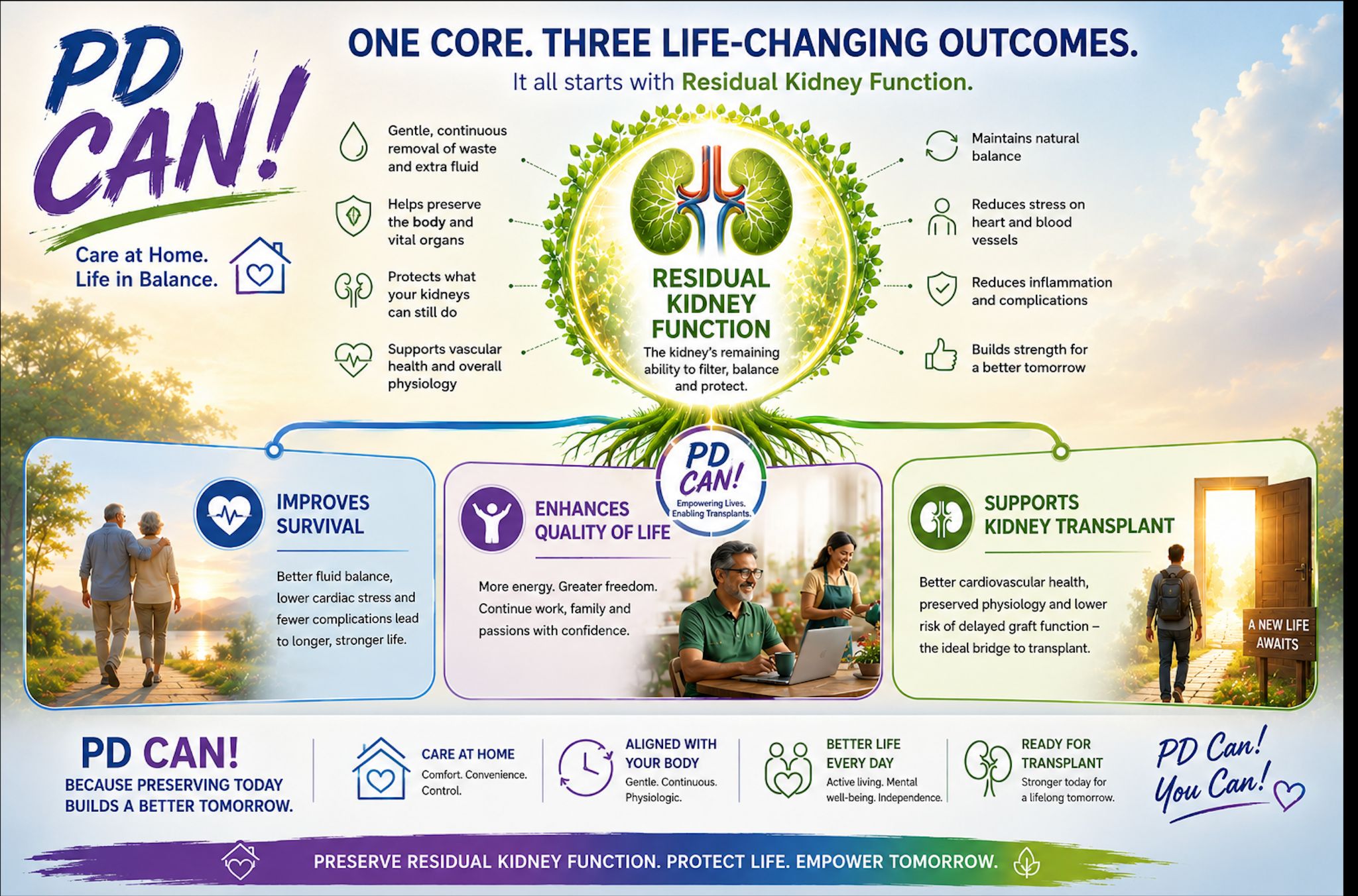
At Vantive India, we believe that the choice of dialysis modality plays a crucial role in directly shaping patient outcomes. Under our philosophy, home-based Peritoneal Dialysis (PD) – “PD Can!!”, is increasingly being recognised not only as a viable alternative to conventional in-centre hemodialysis but also as a treatment approach that supports both clinical outcomes and patients’ lifestyles.Taking into account each patient’s physiological needs and personal circumstances, nephrologists recommend the modality that best aligns with their lifestyle, while prioritizing longer survival and an improved quality of life (QoL). PD offers a gentle and continuous approach to toxin and fluid removal. This approach is associated with better preservation of residual renal function while maintaining vascular integrity—critical factors for long-term health and readiness for kidney transplantation.
As Vikas Taneja, the Country Head of Vantive India, highlights, “that our goal is to equip nephrologists with treatment approaches that go beyond sustaining life and to preserve the body for the ultimate goal of transplantation. PD supports vascular preservation and hemodynamic stability, ensuring a smoother transition to kidney transplantation while allowing patients to lead active and productive lives.”
By enabling care at home and aligning treatment with the body’s natural rhythm, PD empowers patients not just to survive but to thrive. Vantive India’s commitment extends beyond innovation to advancing a ‘Transplant First’ mindset, helping ensure that every step of care is aligned with long-term patient outcomes.
To bridge Improved survival, lifestyle, and a cure — PD Can!!
Preserving Physiology for Long-Term Success
By Dr. Rammohan Sripad Bhat, Director – Institute of Nephrology, Kauvery Hospital- Electronic City, BengaluruIn managing ESRD, Dr. Rammohan Bhat considers residual renal function (RRF) and lowering cardiac stress as “golden assets.”
Residual Renal Function (RRF) is the kidneys’ remaining ability to clear toxins and excess fluid—is strongly associated with improved survival, and its preservation is a key clinical priority. Patients with PD are often more likely to retain RRF over a longer duration, whereas those on Hemodialysis (HD) often experience a decline in this function within the first year of treatment. Sustained RRF contributes not only to longevity but also to overall physiological stability.
Cardiovascular complications remain the leading cause of morbidity and mortality among dialysis patients, including arrhythmias, heart failure, and stroke. In this context, PD presents several distinct advantages over conventional thrice-weekly HD`:
- A continuous, gentle dialysis process that is heart friendly
- Reduced incidence of fluid overload and high potassium, supporting improved blood pressure control and reducing cardiac risk
- Avoidance of vascular access–related cardiac strain, particularly that associated with arteriovenous fistulas. AV Fistula is necessary to provide safe long-term HD, but it puts an extra stress on the heart and increases risk of heart failure.
PD also enhances Quality of Life (QoL). Its home-based, flexible approach enables patients to maintain work, social engagement, and mental well-being, essential for a smoother transplant journey.
As Dr. Bhat emphasizes, while therapy must be individualised, for many patients, PD offers a clear strategic advantage.
For the right patient, PD Can!! provide the edge for long-term success.

Maximizing Quality of Life and Transplant Success
By Dr. Pallavi Patri, Lead Consultant – Nephrology, SPARSH Hospital, Bengaluru
The goal of modern renal care, as Dr. Pallavi Patri advocates, is to integrate treatment into the patient’s life, not the other way around. PD supports a significantly better QoL, enabling patients to work, travel, and maintain active family roles by its flexible, home-based nature. This autonomy fosters the discipline and health literacy required for rigorous post-transplant protocols.
From a clinical standpoint, Dr. Pallavi Patri added that patients on PD may have certain advantages over Hemodialysis patients as they approach kidney transplant. Evidence shows that PD patients may have lower rates of Delayed Graft Function (DGF) indicating a higher likelihood of immediate function of the new transplanted kidney compared to those on HD. This difference is often attributed to the nature of the therapies. Hemodialysis involves intermittent, and at times significant, fluid shifts that can lead to greater fluctuations in blood pressure and an earlier decline in residual urine output. In contrast, the gentle and continuous nature of PD supports better BP stability and higher chances of preservation of urine production. This equilibrium ensures a seamless transition to kidney transplant once the donor organ is introduced. While medical decisions are never “one size fits all” and must be personalized, the “PD Can!!” philosophy highlights a powerful path toward longevity and being the ideal bridge to transplant.
Disclaimer – The above content is non-editorial, and TIL hereby disclaims any and all warranties, expressed or implied, relating to it, and does not guarantee, vouch for or necessarily endorse any of the content.