Supreme Court declines ex-Trump campaign aide Carter Page’s effort to revive lawsuit over FBI surveillance

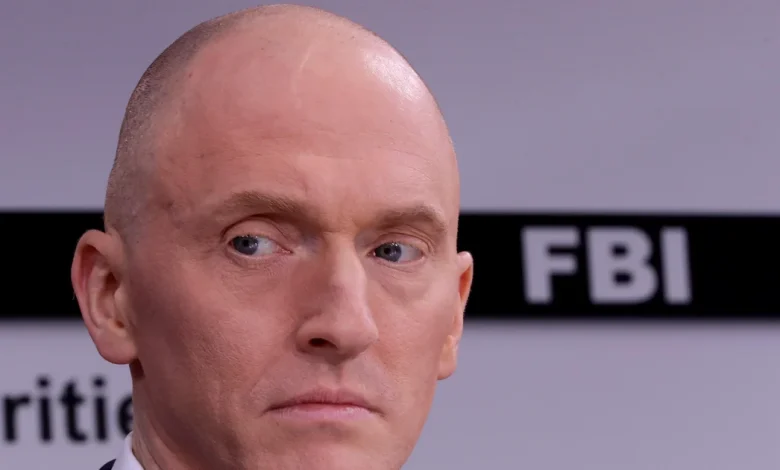
Washington — The Supreme Court on Monday turned away ex-Trump campaign aide Carter Page’s attempt to revive a lawsuit against former FBI Director James Comey and other senior FBI officials over surveillance warrants obtained by the bureau during its investigation into Russian meddling in the 2016 presidential election.
The Supreme Court’s denial of the case came after the Trump administration said in April it had reached a $1.25 million settlement with Page. He had appealed a lower court decision dismissing his lawsuit against the Justice Department, FBI and eight named individuals, including Comey.
The Justice Department’s settlement involved only Page’s claims against the U.S. government, not the individual FBI officials. The deal also pertained only to a claim he raised under the PATRIOT Act, and not those alleging violations of the Foreign Intelligence Surveillance Act, or FISA.
Page served as an informal foreign-policy adviser to President Trump during his 2016 presidential campaign. As part of the FBI’s investigation into Russian meddling in that election and alleged ties between the Trump campaign and Russia, the bureau obtained four warrants under FISA to electronically surveil Page, including one in October 2016 and three others in 2017.
The Justice Department’s internal watchdog examined the bureau’s handling of the applications to obtain the warrants to monitor Page and found that the FBI made 17 “significant errors and omissions” in its initial application in 2016 and the three renewal requests. In particular, the inspector general criticized the FBI for its reliance on a set of opposition research memos prepared by ex-British intelligence officer Christopher Steele. The so-called “Steele dossier” contained salacious and unproven allegations about then-candidate Trump.
The FBI later acknowledged it should have ended its surveillance of Page earlier.
Page filed his lawsuit in November 2020, alleging that his surveillance was unlawful because the warrant applications were false and misleading. But in 2022, U.S. District Judge Dabney L. Friedrich dismissed Page’s lawsuit, and the U.S. Court of Appeals for the District of Columbia affirmed that decision in 2024.
The D.C. Circuit ruled that the statute of limitations barred Page’s assertions against the federal entities and FBI personnel.