Florida man sues police over false arrest linked to facial recognition error – National

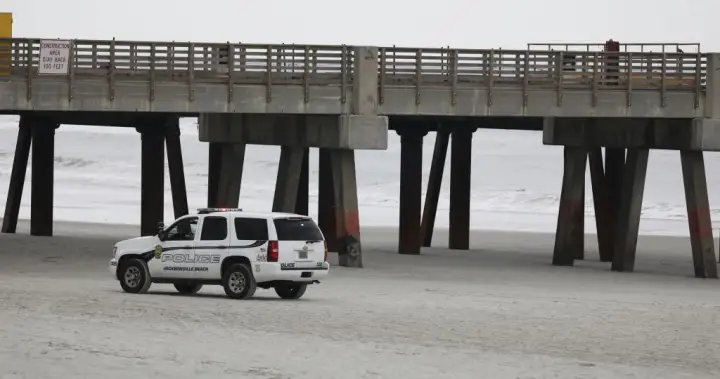
A Florida man has filed a lawsuit against multiple U.S. law enforcement agencies, claiming he was wrongfully arrested and falsely accused of luring a child after malfunctioning facial recognition technology misidentified him.

When the 52-year-old man was arrested in August 2024 at his home in front of his wife and daughter, in San Carlos Park, Fla., outside of Fort Myers, he was informed he had been caught on McDonald’s security cameras in Jacksonville Beach allegedly attempting to lure a girl under the age of 12 into his company, according to the lawsuit.

The man, who resides some 300 miles from Jacksonville Beach, where the alleged crime occurred, had never set foot in the area, the legal filing states.
The case was dismissed last year, and his charges were dropped in connection with the alleged incident in November 2023, according to the American Civil Liberties Union (ACLU), which filed the case on his behalf, though residual “trauma” remains, it says.

Get daily National news
Get daily Canada news delivered to your inbox so you’ll never miss the day’s top stories.
The lawsuit, which has been brought against the Jacksonville Beach Police Department, the Jacksonville sheriff’s office, and Bob Gualtieri, the sheriff of Pinellas County, accuses investigators of arresting the man using “an incorrect result from facial recognition” and “concealing evidence that showed he could not have committed the crime.”
The lawsuit describes a flawed photo lineup presented to a witness, in which they incorrectly identified an innocent man as the suspect due to “automated bias.”
Facial recognition technology is designed to find the closest-looking face in a database. However, if the suspect is not in the database, the system can still return an innocent person who resembles them, the lawsuit explains.
The candidate is then placed among several filler images selected to resemble the perpetrator, a standard practice to ensure the suspect does not stand out. But because the suspect was selected for its resemblance to the perpetrator, it is likely to resemble them more closely than the fillers, it continued.
Even if the candidate is innocent, the witness is likely to select it as a match because it is the best option available to them, it stated.
In addition to flawed identification practices, the lawsuit claims that the man lost income as he was subjected to months of prosecution proceedings and was publicly branded by his mugshot, which remains online despite the charges being dropped and his record being wiped. Nor has he received an apology from law enforcement agencies, it says.
Speaking on his experience, the man told the ACLU: “The night I spent in jail after they arrested me for a crime I did not commit still haunts me to this day. I will never get over how terrified and worried I was, wondering if I’d ever go home to my wife and daughter again.”
“Over a year later, I’m still picking up the pieces of my life, all because the police relied on this dangerous technology instead of doing their jobs and actually investigating. Florida police must implement safeguards and ensure this never happens to anyone else, because until they do, nobody is safe,” he continued.
According to the ACLU, the man’s case is just one of 15 known examples of this type of misidentification error in the United States, which it says shows higher rates of false matches on people of colour, women, older people, and young people.
“To date, police in Maryland, Michigan, Missouri, Louisiana, Nevada, New Jersey, New York, North Dakota, Florida, and Arizona are publicly known to have wrongfully arrested people due to reliance on this technology,” it says.
The man is seeking compensatory damages in an amount to be determined at trial for “non-pecuniary injuries,” including pain, suffering, humiliation, embarrassment, emotional distress, anxiety, and loss of enjoyment of life; and for “pecuniary losses, including bond costs, criminal defence attorney’s fees, and lost income.”
He is also demanding that serious policy changes be implemented immediately to curb the risk of wrongful arrests caused by unreliable facial recognition technology.
© 2026 Global News, a division of Corus Entertainment Inc.