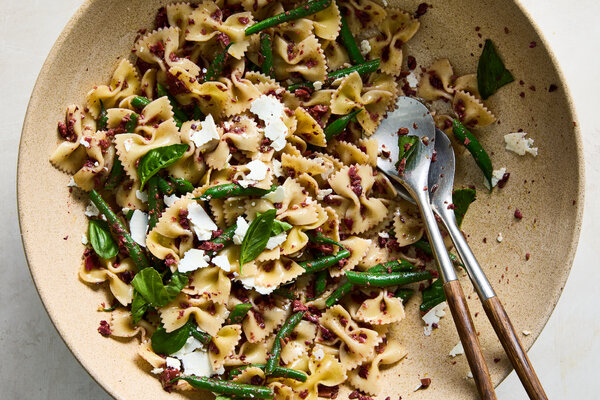
Whether or not you like room-temperature noodles dressed with vinaigrette and tossed with a carnival of mix-ins, you will probably make or be served several pasta salads this summer. They’re too practical to avoid: They stretch seasonal vegetables into a full meal, they’re make-ahead, and they’re easy to stick in a container and schlep to the beach. But, most of the time, I find they’re not all that good.
The two most common reasons for this are flavorless pasta or dry salad. The first results from cooling the noodles before combining them with the dressing. A good pasta salad harnesses residual warmth, so the noodles soak up flavor. Without that warmth, the vinaigrette simply sits on top. The pasta itself, which usually makes up the bulk of the salad, remains bland, and no matter how much you add, the seasoning won’t be right.
The second reason is even more common: not giving the noodles enough liquid. As they cool, noodles absorb a tremendous amount. There’s no way that an ordinary amount of vinaigrette would end up pooling, which means there’s nothing left to make the salad saucy.
To dress your pasta salad for the moment it’ll be eaten, not the moment it’s made, treat it as you would a pan of pasta. Cook it just shy of al dente, toss it with the vinaigrette and plenty of pasta water, and then let it cool. Undercooking the noodles a little more than you usually would means they’ll absorb everything you add — tomato juices, vinegar, citrus juice, olive brine — without becoming flabby. A splash of pasta water ensures there’s enough left behind to emulsify with any oil and gloss the salad. Incorporate anything else you want to remain crisp, cold or green right before you serve.
Making a pasta salad this way isn’t complicated, but it asks you to pay attention. You want to drain the noodles while they’re still a little chalky. They should retain more bite than their desired end state. Subtracting a couple of minutes from the cook time on the box is usually a good place to start. You want a white ring to remain at the center of each noodle. Taste as you approach that point, and stop when there’s still room for the noodles to continue cooking as they cool.
Save up to three cups of pasta water. How much you’ll need depends on what you’re mixing the noodles with. If it’s, say, a bowl of salted tomatoes puddling with juices and vinegar, you probably won’t use it all. If you’re tossing them with tapenade, seasoned with only a scant amount of lemon juice and vinegar, you’ll need it. Begin with a little pasta water, and then add more if the salad begins to dry out as it cools.
The juiciness you’re aiming for when the noodles are cool shouldn’t make the dish less practical. You don’t want it so saucy that you risk spills in your picnic basket or require spoons at the beach. But for goodness’ sake, give it enough liquid that all those sparkling acids and vegetable flavors are the first and last thing you taste. They should coat the salad and live within every noodle.
Follow New York Times Cooking on Instagram, Facebook, YouTube, TikTok and Pinterest. Get regular updates from New York Times Cooking, with recipe suggestions, cooking tips and shopping advice.