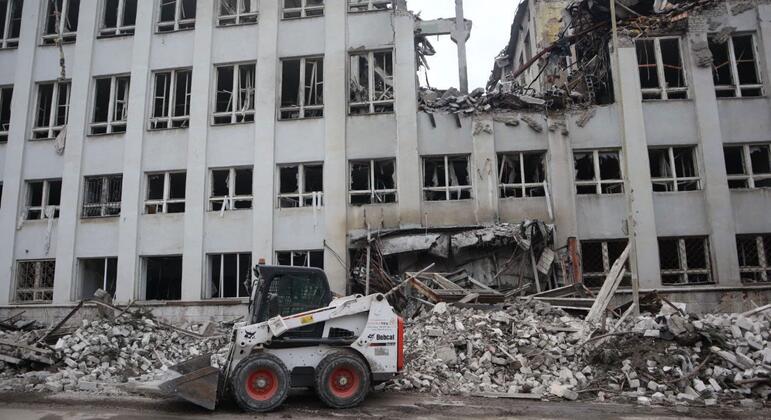
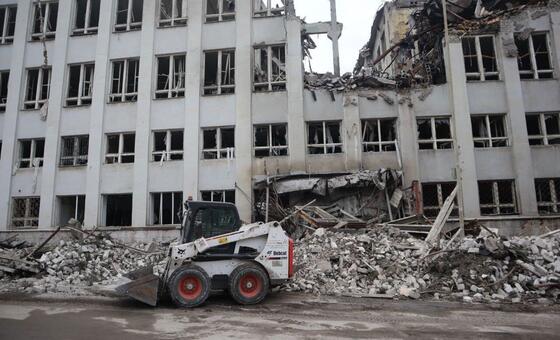
Ukrainian authorities reported eight civilians killed and 35 others wounded in Russian attacks on the city of Dnipro on Monday, while Russian authorities reported at least six people killed by Ukrainian strikes on Russian and Russian-controlled territory over the weekend.
Moscow began the full-scale invasion of Ukraine on 24 February 2022, eight years after annexing the Crimean Peninsula.
The UN has repeatedly and forcefully condemned Russia’s full-scale invasion, with multiple General Assembly resolutions demanding Russia withdraw its forces while the UN and its partners continue to provide crucial humanitarian assistance.
The latest civilian casualties come as Russia and Ukraine escalate attacks on critical energy infrastructure. Russian authorities reported on Sunday that Ukrainian forces set a major oil refinery ablaze, which could deepen Russian fuel shortages.
Meanwhile, Russian armed forces targeted energy facilities across Ukraine throughout the 2025-26 winter months, causing emergency electricity outages affecting millions of Ukrainian civilians, according to a UN human rights office (OHCHR) report released on Monday.
Attacks target electricity and heating
The OHCHR report said that Russian attacks had destroyed energy generation, transmission and distribution facilities through the frigid winter months.
“Loss of electricity and heating during winter affected people’s health, safety and ability to maintain an adequate standard of living, particularly for older people, those with disabilities and families with children,” Danielle Bell, Head of the UN’s Human Rights Monitoring Mission in Ukraine, said in a press release.
The report, titled Attacks against Ukraine’s energy infrastructure and update on the human rights situation in Ukraine, finds that Russia carried out at least 423 attacks on electricity generation, transmission and distribution facilities, as well as at least 74 strikes on centralised heating infrastructure, which supplies heating and hot water to most Ukrainian urban households.
Russian attacks caused hundreds of thousands of Ukrainian civilians to lose access to heating during the country’s coldest winter since 2010.
Due to extensive damage, OHCHR said it will not be possible to fully restore energy generation capacity by next winter, meaning that civilians may be left to face the cold once more.
Civilian death toll rises
The report also documents increased civilian casualties, continuing violations against prisoners of war, and ongoing restrictions on fundamental rights in territory occupied by Russia.
It details 1,272 civilians killed and 6,871 injured in Ukraine from 1 December 2025 to 31 May 2026, a 40 per cent increase from the same period the previous year. Long-range missile and drone attacks remained the leading cause of civilian casualties, according to the report.
“Our findings highlight several deeply worrying trends: sustained attacks on Ukraine’s energy infrastructure during winter, rising civilian casualties across Ukraine, continued torture and ill-treatment of prisoners of war, and ongoing restrictions on fundamental rights in occupied territory,” Ms. Bell said.
The growing use of short-range drones near frontline areas has increased risks to civilians, impeded evacuations and humanitarian operations, and increased some communities’ isolation, OHCHR said.
Violations against POWs
The report highlights serious violations against both Russian and Ukrainian prisoners of war, based on 1,926 interviews with victims and witnesses.
Nearly all Ukrainian prisoners of war interviewed for the report described torture, beatings, sexual violence, electric shocks and denial of medical care by Russian forces. Meanwhile, most Russian prisoners of war held by Ukraine also reported torture or ill-treatment.
OHCHR recommended that Russia and Ukraine strengthen civilian protection, ensure accountability and restore essential infrastructure.
“All prisoners of war must be treated humanely and in accordance with international humanitarian law,” OHCHR’s press release reads.
In Russian-occupied territories, the report documents restrictions on freedom of expression and other fundamental freedoms, torture, forced conscription, and prohibitions of the Ukrainian curriculum in schools. OHCHR continues to request access to occupied territory for independent monitoring.
UN agencies step up
Four years after the full-scale invasion began, UN agencies continue to deliver food kits and medical supplies to frontline areas, deploying emergency personnel and mobile clinics, distributing trauma kits to most Ukrainian cities, and supporting health and sanitation programs for Ukrainian civilians affected by the conflict.