One billion more people face at least one day of extreme heat stress, compared to 1970s: Study, ETHealthworld


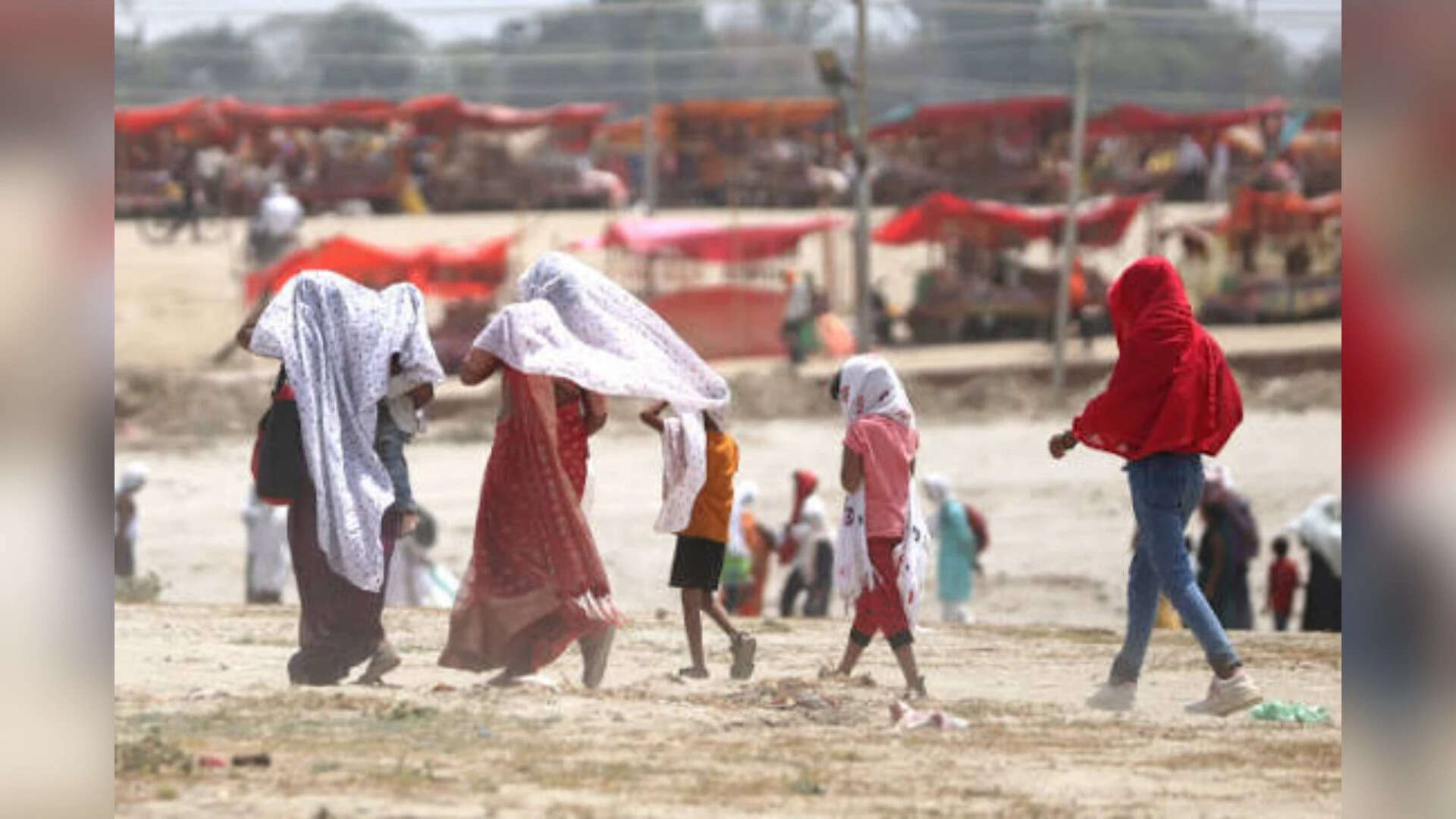
New Delhi: An additional one billion people face at least one day of extreme heat stress, compared with the 1970s, showing that heat stress around the world is increasing in frequency, severity and duration, during both the day and night, a study shows.
Researchers from the European Centre for Medium-Range Weather Forecasts in the UK and Germany suggested that heat-health action plans, early-warning systems, urban cooling interventions, and the integration of heat stress metrics in climate risk assessments may help reduce vulnerability to heat stress.
Heat stress — the net heat load on an individual — is influenced by factors such as temperature, humidity, wind, and radiation. It can be assessed using the Universal Thermal Climate Index (UTCI), or a ‘feels-like’ temperature, which measures the external factors and models the human body’s response to the environment.
The study, published in the journal Nature Climate Change, analysed a global dataset of human heat stress from 1950 to 2024 and found that feels-like temperatures have risen on the warmest days and nights since the 1970s.
“In the 1970s, 55 per cent of the global population experienced at least 90 days of strong heat stress annually; this has risen to 70 per cent in our current climate. Exposure to at least one day of extreme heat stress has grown from 16 per cent to 22 per cent; accounting also for the increase in population, this represents an additional one billion people,” the authors wrote.
The ten warmest nights of each year have warmed faster than the ten warmest days, at a global average rate of 0.32 degrees Celsius per decade, compared with 0.27 degrees Celsius per decade, respectively, the analysis found.
The researchers also found that extreme feels-like temperatures are now more frequent on every continent.
Subtropical regions, including southern North America, southern Europe, northern and southern Africa, and South America now experience up to 50 additional days per year with a strong to extreme heat stress — UTCI greater than 32 degrees Celsius or equal to 46 degrees Celsius, respectively — compared to the 1970s. PTI